
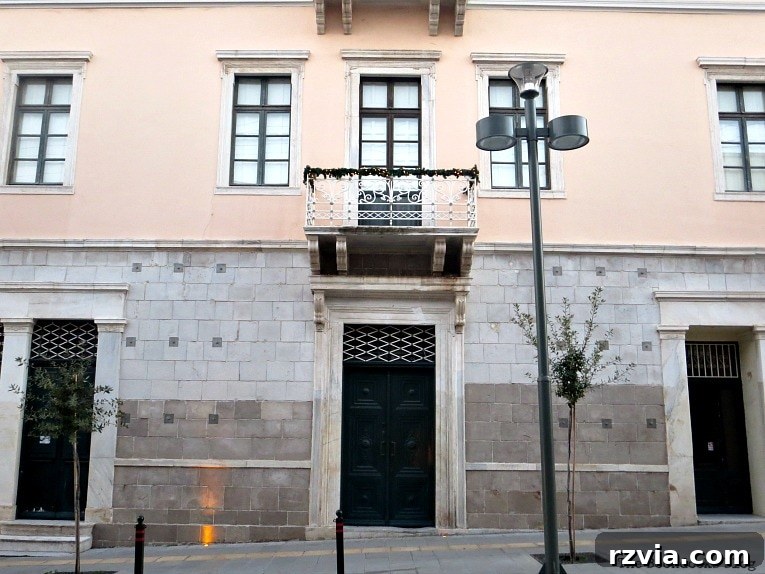
Discovering the Panagiotopoulos Mansion: A Neoclassical Gem in the Heart of Greece
Last month, during my Easter break, I regrettably missed sharing my usual monthly photo essay with you. However, I am thrilled to be back this month, and I believe this exceptional collection of photographs will more than compensate for the absence. Join me on a visual journey through an magnificent old Greek mansion, tucked away in the vibrant center of our town.
The discovery of this architectural treasure was, quite serendipitously, thanks to my daughter. One enchanting evening, as we strolled casually through the town, she suggested we venture inside. What awaited us behind its imposing facade was nothing short of breathtaking – an experience that far exceeded any expectations I might have had. The sheer beauty and historical richness that unfolded before our eyes left me utterly captivated.
To further immerse you in the grandeur of this mansion, I’ve included a video at the end of this post. This video offers a rare glimpse into areas of the building that I was unable to access during my visit, providing an even more comprehensive perspective on its splendor.
A Glimpse into History: The Panagiotopoulos Mansion’s Legacy
This architectural marvel is none other than the Panagiotopoulos Mansion, a prominent three-story neoclassical edifice that stands as a testament to Greece’s rich past. Constructed between 1856 and 1860, this grand residence was commissioned by a remarkably wealthy goldsmith – a figure so influential and prosperous that he was often likened to the Aristotle Onassis of his era. The mansion proudly bears his family name, commemorating their significant contribution to the town’s landscape and cultural heritage. The esteemed architect Panagiotis Kalkos was the visionary behind its design, imbuing it with the timeless elegance and robust character of neoclassical architecture.
Tragically, the mansion entered a period of decline in the early 1980s following the passing of the last remaining family member. Without proper guardianship, it gradually fell into disrepair, a common fate for many historic properties. Thankfully, its significance was recognized, and the Municipality intervened, taking ownership to safeguard this invaluable piece of heritage. In 1995, the building suffered extensive damage during a catastrophic earthquake, a moment that threatened its very existence. However, through dedicated efforts and a profound commitment to preservation, the Panagiotopoulos Mansion has since undergone meticulous repair and restoration. Today, it is not merely a restored building but a cherished work of art, carefully preserved for future generations.
On the evening of our visit, the mansion had been transformed into a vibrant photo gallery, showcasing local artistic talent against a backdrop of historical grandeur. This current use is a beautiful continuation of its new life. Since its comprehensive restoration a few years ago, the Panagiotopoulos Mansion has firmly re-established itself as a vital component of the town’s cultural infrastructure, regularly hosting exhibitions, events, and educational programs that celebrate both its past and its present.
Artistry Adorns Every Ceiling: The Pompeian Frescoes
One of the most captivating features of the Panagiotopoulos Mansion is undoubtedly its ceilings, which are adorned with stunning Pompeian-style frescoes. These intricate artworks transport visitors back in time, reflecting the artistic trends and influences prevalent during the mansion’s construction. Much of this original artwork was skillfully executed by talented Italian artists who resided in Patra during that period, bringing with them a rich heritage of European artistic traditions. Their presence speaks volumes about the cultural exchange and sophisticated tastes of the era, elevating the mansion’s interior design to a truly international standard.
Architectural Foundations: Masonry, Wood, and Marble
The very structure of the Panagiotopoulos Mansion embodies a blend of strength and artistry, constructed with robust masonry and elegant wood elements. This combination not only ensured its durability through centuries but also allowed for intricate detailing and decorative flourishes. Below, you can see a striking example of this craftsmanship: a beautifully adorned ceiling located directly above one of the mansion’s grand staircases. The seamless integration of structural integrity and aesthetic appeal is evident in every corner of this magnificent building.
Ascending through the mansion, one cannot help but admire the intricate stair rails, masterfully crafted to complement the neoclassical style. These delicate yet sturdy railings guide visitors up steps fashioned from exquisite marble, a material renowned for its timeless beauty and durability. The choice of marble for the stairs speaks to the original owner’s lavish tastes and the desire for enduring elegance throughout the residence.
Further along, another staircase reveals a ceiling painted with such delicate precision that it conjures the image of twinkling stars scattered across a night sky. This celestial motif adds a layer of whimsical charm and dreamlike quality to the passageway, transforming a functional space into an artistic experience. Such details underscore the mansion’s commitment to aesthetic beauty in every conceivable aspect.
The artistry continues into the hallways, where even these transitional spaces boast ceilings adorned with elegant designs. Each ceiling serves as a canvas, contributing to the overall grandeur and cohesive aesthetic of the mansion. The attention to detail in these frescoes ensures that beauty is encountered at every turn, not just in the main salons.
The architectural elements extend to the stairwell, where majestic Ionic columns stand tall, adding a classical touch to the vertical journey through the mansion. Ionic columns, characterized by their distinctive scroll-like volutes, are a hallmark of neoclassical design, lending an air of sophisticated elegance and historical gravitas to the interior space.
Interestingly, the construction period of the Panagiotopoulos Mansion coincided with the peak of the Baroque architectural style in many parts of Europe. However, the discerning owners of the mansion made a deliberate choice to embrace the neoclassical style. This decision reflects a preference for the symmetry, grandeur, and classical revival principles that neoclassical architecture embodies, standing as a timeless statement against the more ornate and dramatic Baroque trends of the time. This choice imbued the mansion with an enduring elegance that remains captivating to this day.
Stepping into one of the mansion’s salons, visitors are greeted by yet another magnificent fresco gracing the ceiling. These artistic masterpieces are more than mere decorations; they are narratives painted with skill and passion, often depicting mythological scenes, pastoral landscapes, or intricate geometric patterns that enhance the room’s aristocratic ambiance. Each fresco contributes to the unique character and historical narrative of the mansion.
A closer look reveals the meticulous detail in the corner of one of these frescoes. It’s in these subtle intricacies—the delicate brushstrokes, the harmonious color palettes, the precise outlines—that the true mastery of the artists comes to light. These details remind us of the dedication and artistic prowess that went into creating such a splendid home.
The journey of the Panagiotopoulos Mansion is one of both grandeur and resilience. As mentioned earlier, it tragically fell into a state of disrepair after the last owner passed away in 1982. This period was marked by unfortunate looting, which saw many of the original opulent furnishings removed, leaving the once vibrant rooms sparse and empty. It’s a poignant reminder of how vulnerable historical treasures can be without active guardianship.
However, the narrative of decline was not its final chapter. The building was commendably taken over by the local Municipality, initiating a painstaking process of restoration. This commitment ensured that the mansion’s architectural integrity and artistic splendor were not lost to time, transforming it once again into a beacon of cultural pride.
Above the central doors leading into one of the main rooms, another magnificent fresco commands attention. Strategically placed, these artistic embellishments serve as both a welcome and a grand introduction, preparing visitors for the beauty that lies within each new space. They are not just decorations, but integral parts of the mansion’s original design and intended aesthetic.
Upon entry into the mansion’s main room, one is immediately struck by the presence of massive Doric columns. These imposing architectural elements, known for their simple yet powerful design, provide a sense of classical strength and gravitas. They speak to the enduring influence of ancient Greek architecture, grounding the neoclassical style in its historical roots and creating an impressive visual statement that underscores the mansion’s grandeur.
For an even broader perspective of this magnificent central room, I highly recommend visiting this link, which showcases the space during a past photo exhibition. It offers a wonderful opportunity to see how the room transforms and adapts to contemporary cultural events, while still retaining its historical essence.
Looking up at the ceilings, with their vast expanses of intricate frescoes and delicate borders, it’s easy to feel a profound sense of awe—and perhaps a phantom ache in the neck or back just contemplating the sheer effort involved. The dedication required to paint such grand canvases, often at great heights and with meticulous detail, is a testament to the artists’ skill and perseverance. These are not merely painted surfaces; they are masterpieces born of strenuous labor and artistic vision, truly gorgeous to behold and appreciate.
On the third floor, we encountered a smaller, more intimate room. Intriguingly, it was the only room devoid of any exhibition pieces on the evening we visited, offering a brief moment of quiet contemplation amidst the bustling crowds. Its relative emptiness allowed us to focus purely on the architectural details and the surviving decorative elements, imagining it perhaps as a private study or a guest parlor in its prime.
Despite the mansion being packed with enthusiastic visitors, which made capturing full room shots a challenge, I found myself drawn to the exquisite details of the ceilings and walls. These surfaces, rich with frescoes and intricate patterns, offered an endless source of visual delight. While there is very little of the original furnishings left—a common consequence of its period of abandonment—I did manage to catch a small glimpse of some exquisite furniture pieces that have been introduced, harmonizing beautifully with the historical setting.
It is truly remarkable to consider how the landscape around the Panagiotopoulos Mansion has transformed over time. When it was originally constructed, this grand residence was surrounded by lush orchards, indicative of a more rural, expansive setting. Today, it stands proudly on the town’s bustling main street, a testament to urban development and the march of time. This juxtaposition of its past serene surroundings and its present vibrant, central location only adds to its unique charm and historical narrative.
A Deeper Dive: Video Perspectives on the Mansion
To provide an even richer and more dynamic understanding of the Panagiotopoulos Mansion, I have included a video featuring an interview with the former mayor. This interview offers valuable insights into the mansion’s history, its restoration process, and its significance to the community. Pay close attention to the following timestamps: 1:50, 5:21, 9:47, and 10:45, where you can catch captivating glimpses of various portions of the building that truly bring its story to life.
Reflecting on a Greek Treasure and Engaging with Its Legacy
I sincerely hope you have thoroughly enjoyed this immersive look into the Panagiotopoulos Mansion, a true Greek treasure. Located in the very heart of my town, it stands as a rarity, a unique glimpse into a bygone era, made even more special by its recent and meticulous restoration just a few short years ago. Its transformation from a neglected relic to a vibrant cultural center is a remarkable story of preservation and community spirit.
This journey through its neoclassical halls, adorned with stunning frescoes and classical columns, reminds us of the profound beauty and historical depth that can be found in our urban landscapes. It prompts a question for you, dear reader: Are there any hidden or recently restored old mansions in your own area that hold similar stories and beauty?
If your curiosity for captivating imagery has been piqued, I invite you to delve deeper into my collection. Explore more of my photographic essays and visual journeys by visiting my dedicated photo gallery here. Each image is a window into a moment, a place, or a feeling I’ve had the privilege to capture.
If this journey through history and architecture has resonated with you, please consider sharing this post with your friends on social media, or save it for future inspiration on Pinterest. The image above is perfectly designed for pinning!
For those who truly appreciate the adventures and insights shared here, I warmly invite you to subscribe to my blog. You’ll receive fresh content and captivating stories twice a week directly in your mailbox, ensuring you never miss an update. The subscription form is conveniently located on the sidebar, and I assure you, your email address will always remain private and will never be shared with any third party.
More Photo Essays to Explore:
<<Sweet Inspiration Link Party #56 HOME Sweet Inspiration Link Party #57 >>
Linking up to these Link Parties
This blog is for entertainment purposes only; my DIY tutorials are not professional advice. Read my full disclaimer here.
I love it when I get your comments and I will try reply to them or visit you on your blog. Please do not add a hyperlink to your comment, otherwise we cannot publish it.