
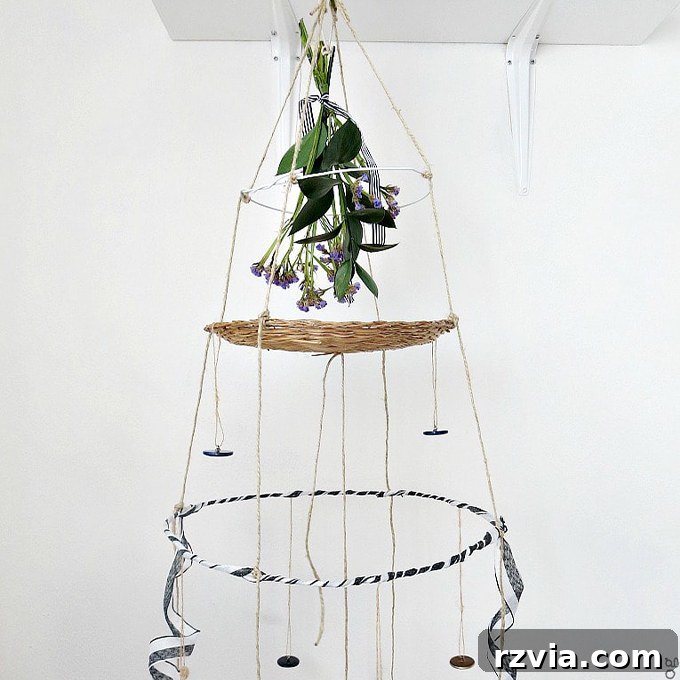
Transforming ordinary household items into extraordinary home decor is a delightful and sustainable way to personalize your living space. This guide will walk you through creating a unique DIY mobile hanger, artfully crafted from simple metal wire hangers and a collection of leftover art materials found right in your home. Get ready to unleash your creativity and give forgotten items a new lease on life, turning them into a captivating focal point for any room.
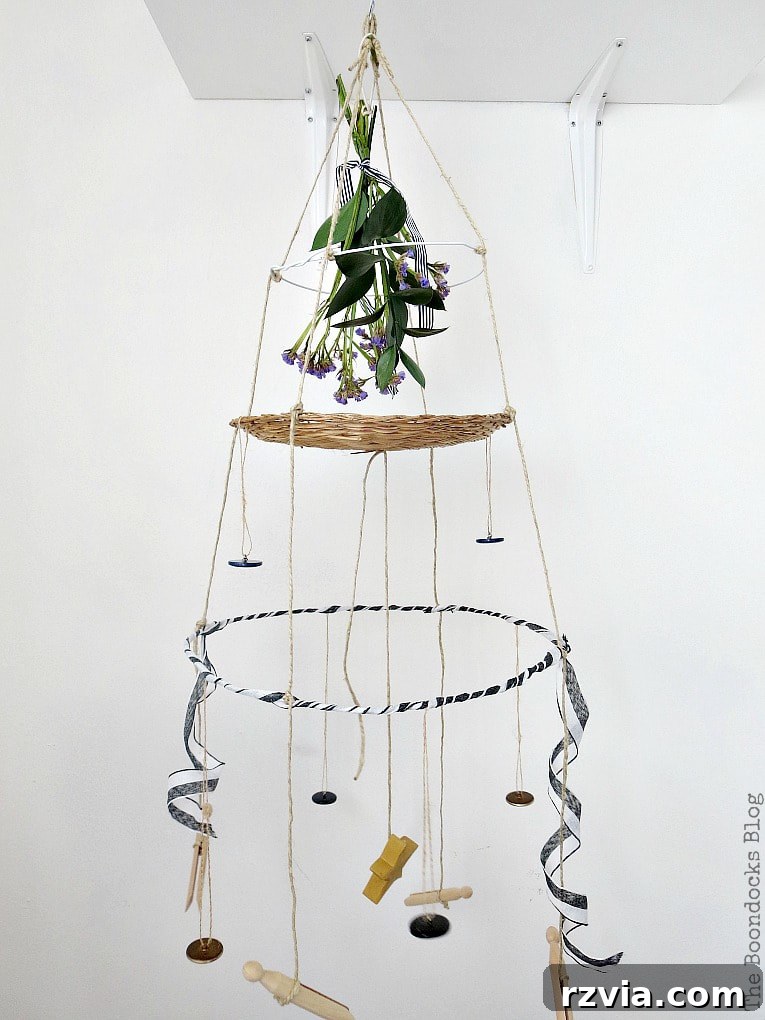
It’s that exciting time of the month again – the International Bloggers Club Challenge! Our global community of friends comes together each month, brimming with enthusiasm to share innovative projects and cultural insights into crafting from our respective corners of the world. In our previous challenge, we delved into creative gardening ideas, showcasing how everyday items could become beautiful planters. The month before that, we explored imaginative projects using various fabrics, transforming textiles into charming home accents. This month, the focus shifts to wire, promising a fresh array of ingenious creations that truly highlight the versatility of this material. Make sure to scroll to the very end of this post to discover the incredible projects my fellow bloggers have crafted!
The theme of “wire” for this month’s challenge immediately sparked my imagination, leading me into a whimsical and reflective mood. I absolutely adore a good creative challenge, and this one certainly had me thinking outside the box, pushing the boundaries of what everyday objects can become. My chosen project: a truly unique art mobile, meticulously crafted from humble, repurposed wire clothes hangers. This isn’t just a craft; it’s a statement about sustainable living, the beauty of upcycling, and the unexpected potential found in items destined for the trash. The process was both therapeutic and incredibly rewarding, proving that stunning home decor can be achieved with a resourceful mindset and a little ingenuity.


Initially, I found myself pondering countless possibilities for this wire-themed challenge, searching for that perfect spark of inspiration. The breakthrough arrived unexpectedly one day when my son asked me to pick up his dry cleaning. As I gathered the garments, my eyes landed on the collection of white wire clothes hangers – suddenly, the path forward became clear. These seemingly ordinary hangers, often discarded without a second thought after their primary use, revealed their hidden potential. I decided they would be my starting point, the foundational elements for this unique art mobile project. It was a true “aha!” moment, proving that inspiration can strike from the most unexpected places when you’re open to seeing potential in the mundane and embracing the spirit of upcycling.
Disclosure: This post contains affiliate links for your shopping convenience. If you purchase any of these products through the links, we receive a small commission at no extra charge to you. You can find our full disclosure here.
Crafting Your Upcycled Wire Hanger Mobile: Essential Materials and Tools
Gathering your supplies is the first exciting step in any DIY project, especially one focused on repurposing. For this unique mobile art piece, you’ll be surprised at how many items you likely already have on hand. The beauty of this project lies in its flexibility, allowing you to substitute materials based on what’s available and what sparks your personal creativity. The goal is to maximize the use of existing resources, making this an eco-friendly and budget-conscious endeavor. Here’s a detailed list of the core materials I used to bring my vision to life, along with brief notes on their roles:
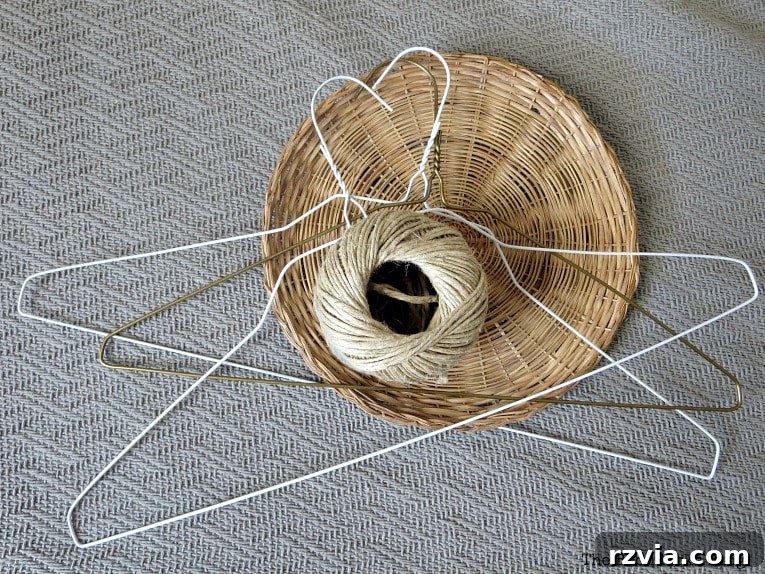
- 2 white wire metal clothing hangers: These are the structural heroes of our mobile, providing the sturdy yet pliable base for each tier. Dry cleaner hangers are ideal due to their consistent gauge and availability for repurposing.
- Pliers: An indispensable tool for safely bending, cutting, and shaping the metal wire. A good quality pair will ensure precise manipulation and protect your hands during the crafting process.
- Twine: This natural, rustic material serves multiple purposes, from connecting the different tiers of the mobile to elegantly suspending various embellishments. Its earthy texture perfectly complements the upcycled aesthetic.
- Wicker plate charger: This forms the striking middle tier of our mobile, instantly adding texture, warmth, and a touch of bohemian or rustic charm. Look for one that’s sturdy and has an open weave to easily attach other elements.
- Various buttons: A fantastic way to utilize those forgotten treasures from your sewing kit. Buttons come in an endless array of shapes, sizes, and colors, offering unique opportunities for personalization and adding visual intrigue.
- Ribbon: Perfect for wrapping around the wire circles, the ribbon adds a decorative touch, introduces a softer texture, and helps secure hanging elements in place, preventing them from sliding.
- Old-fashioned clothespins: These charming wooden pegs add a wonderfully nostalgic and whimsical element to the mobile. They also provide a convenient way to attach small cards or photos, if desired.
- Flowers and leaves: Whether you opt for fresh, dried, or artificial varieties, a small bouquet or individual floral elements will infuse your mobile with a delicate touch of nature and organic beauty, softening the metallic lines.
Step-by-Step Guide: How to Craft Your Unique Wire Hanger Mobile
Now that you have all your materials ready, let’s dive into the creative process of assembling this captivating mobile. This tutorial emphasizes precision and artistic flair, transforming simple wire hangers into a dynamic piece of art. Follow these steps carefully to ensure a sturdy, well-balanced, and visually appealing result that will enhance any room in your home.
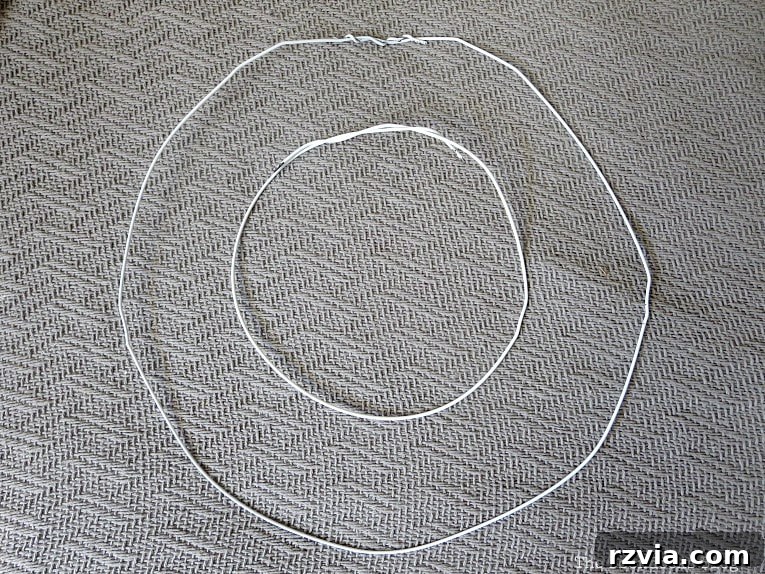
The first crucial step involves preparing your wire hangers. I initially gathered three metal wire hangers, though through the process, I ultimately found that two were perfectly sufficient for creating my three-tiered design. Begin by carefully unwinding and straightening the wire hangers as much as possible. Take your time to remove any kinks or bends, aiming for a relatively straight piece of wire. Once straightened, use your pliers to meticulously shape each piece of wire into a distinct circular form. This requires patience and a steady hand to achieve smooth, even curves. For my design, I made sure to create two circles: one slightly larger and one slightly smaller than the wicker plate charger, which would form my central tier. The variation in size adds visual depth and interest, preventing a monotonous appearance and creating a natural flow between the tiers.
Next, we’ll focus on preparing the suspension mechanism that will allow your mobile to hang beautifully. Take one of the original wire hangers (or a spare if you have one) and, using your pliers, carefully cut off the hook portion. Once separated from the main wire, bend the cut end of this small hook piece into a secure, sturdy loop. This modified hook, cleverly repurposed, will serve as the primary attachment point for hanging your entire mobile from the ceiling or a hook. It’s incredibly important to ensure this loop is robust and closed tightly, as it needs to safely bear the entire weight of the mobile, including all its tiers and embellishments. This step perfectly embodies the essence of upcycling, transforming a discarded element into a vital, functional component of your new art piece.
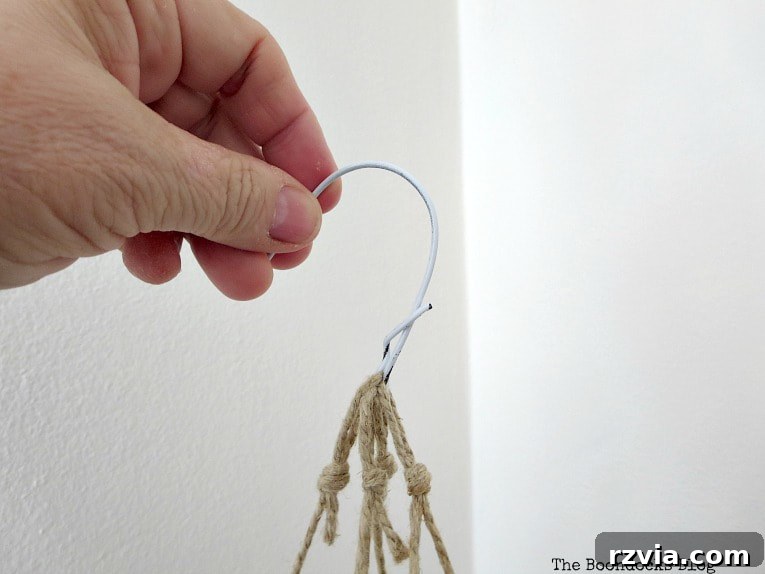
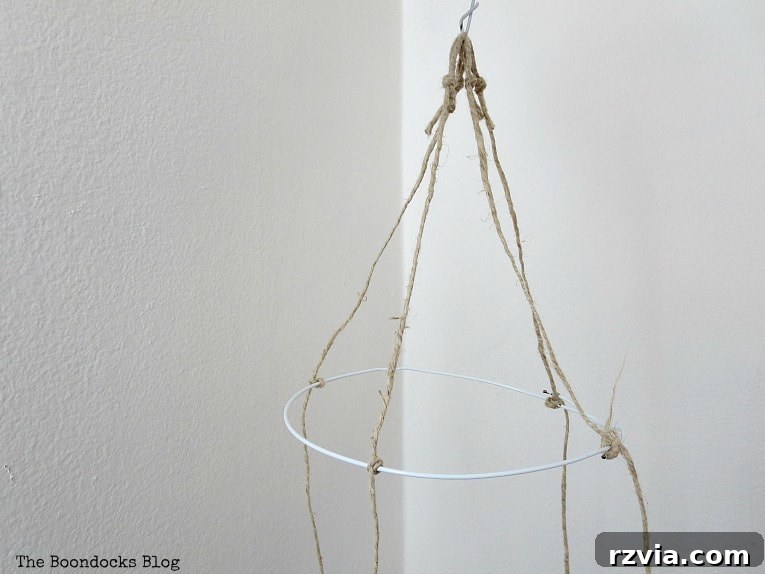
With your precisely shaped wire circles and your repurposed hanging hook ready, it’s time to assemble the captivating tiered structure using your chosen twine. Begin by cutting four equally long pieces of twine. At one end of each piece, create small, secure loops; these will be crucial for attachment. These four loops will then be passed through and attached to the modified hook you just created from the hanger, forming the very top suspension point of your mobile. Ensure they are evenly spaced and securely tied. Now, working downwards, tie the other ends of these four twine pieces at four equidistant points around the smaller wire circle, taking care to ensure it hangs perfectly level. Continue this pattern: further down each piece of twine, measure and secure it to four points on the wicker plate charger, again ensuring it is balanced and level. Finally, extend the twine further down and tie it securely to four points on the larger wire circle. By meticulously following these steps, you will now have a beautifully balanced, three-tiered mobile structure, poised and ready for its unique and personalized embellishments.
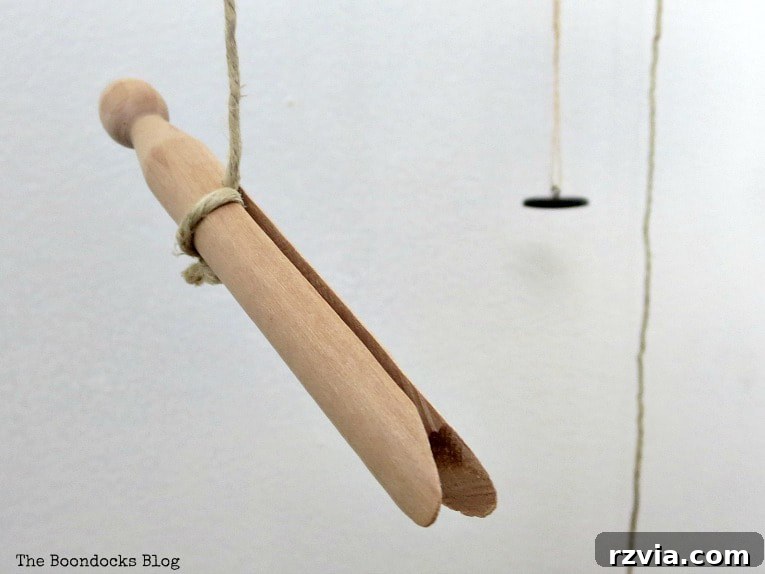
After establishing the main, multi-tiered structure, I allowed the remaining lengths of twine to hang freely from the bottom wire circle, creating natural, delicate tendrils. To these whimsical hanging twine pieces, I attached several old-fashioned wooden clothespins. These simple yet charming pegs instantly infuse any project with a wonderfully rustic and nostalgic feel. You might recall I incorporated them in a similar fashion in my previous Christmas wreath project, where they added a unique touch. For this mobile, they not only enhance the visual appeal with their natural wood texture but also contribute to the overall organic and repurposed theme, adding a touch of country charm that perfectly complements the industrial wire.
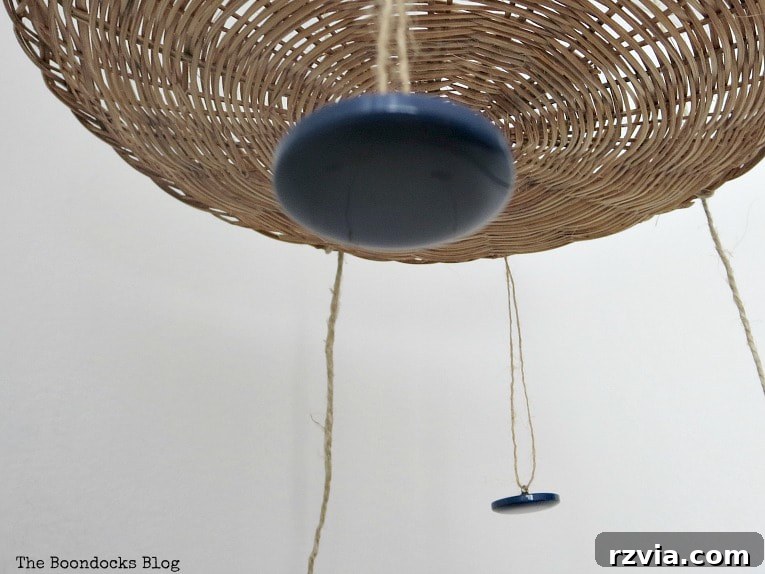
Next, I focused on adding more personal touches and visual flair to the mobile. I took thin pieces of twine and meticulously threaded them through a selection of various large-sized buttons, creating delightful individual hanging elements. These transformed buttons, now repurposed into charming dangling accents, were then carefully suspended from the wicker plate charger, forming an intricate skirt of decorative details. They gently sway with the slightest breeze, catching the light and adding dynamic movement and a playful spirit to the mobile, making it captivating from every angle.
At this point, you might be curious about my prominent choice to feature buttons, perhaps wondering if other embellishments might have appeared “prettier” or more conventional. My answer, truly, lies at the heart of the upcycling movement! Having recently organized and decluttered my sewing box, I discovered an absolute abundance of buttons – far more than one person could ever reasonably use. It was the perfect, guilt-free opportunity to give these forgotten treasures a brand-new purpose, transforming them into charming, unique decorative elements. This philosophy of utilizing what you already have not only saves money but also injects a genuine sense of authenticity, resourcefulness, and a unique narrative into your handmade decor, making each piece truly one-of-a-kind.
The next strategic step was to integrate a ribbon around the circumference of the larger wire circle, which serves as the bottom tier of the mobile. This simple yet effective addition serves two crucial purposes, significantly elevating both the aesthetics and functionality of the entire piece. Firstly, the ribbon introduces an additional layer of visual interest, adding a softer texture and a potential pop of complementary color against the metallic wire. This breaks up the industrial feel of the wire, creating a more harmonious blend of materials. Secondly, and perhaps more importantly from a practical standpoint, it acts as a subtle but highly effective barrier. This clever placement prevents the various buttons and other delicate hanging elements, attached with thin twine, from sliding haphazardly along the wire. Nobody wants their carefully arranged decorative pieces to cluster unevenly; this ribbon ensures everything stays beautifully spaced and securely in position, maintaining the mobile’s intended design integrity and visual balance.
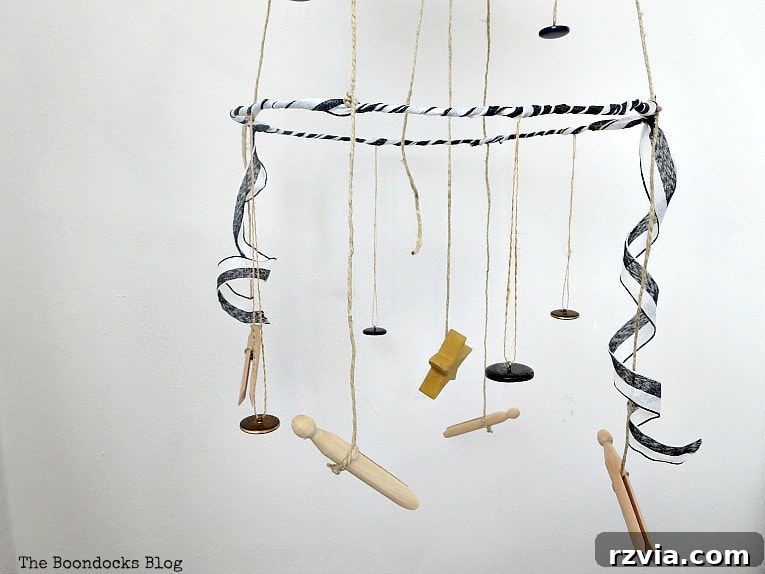
To provide a beautiful focal point and a natural, softening touch at the very top of the mobile, I carefully selected a small, fresh bouquet of flowers and leaves. These botanical elements were artfully tied together with a short piece of twine or a coordinating ribbon, forming a charming, compact cluster. This delightful floral embellishment was then suspended directly from the uppermost point of the mobile, precisely where the initial twine loops converge and attach to the repurposed hanger hook. This strategic placement ensures the bouquet becomes a striking, organic crown for the entire piece, drawing the eye upwards and completing the harmonious blend of repurposed industrial materials and delicate natural beauty. It adds an inviting freshness and a touch of elegance that truly balances the overall design.
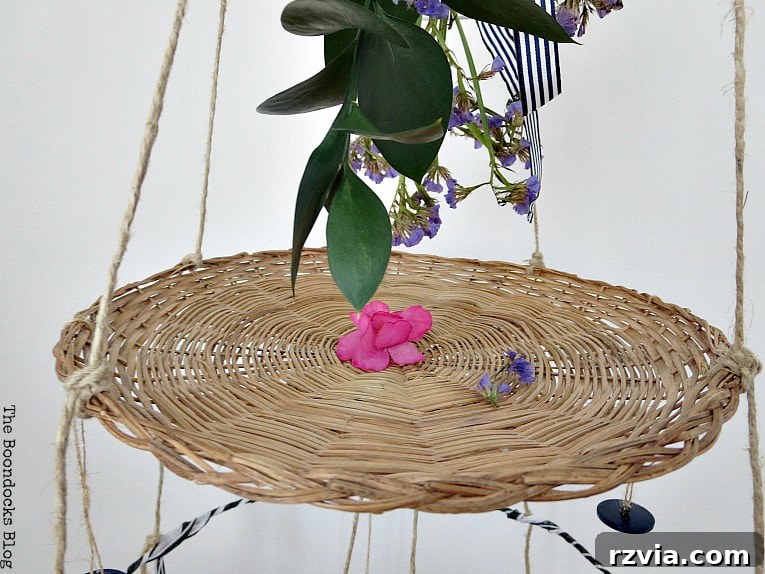
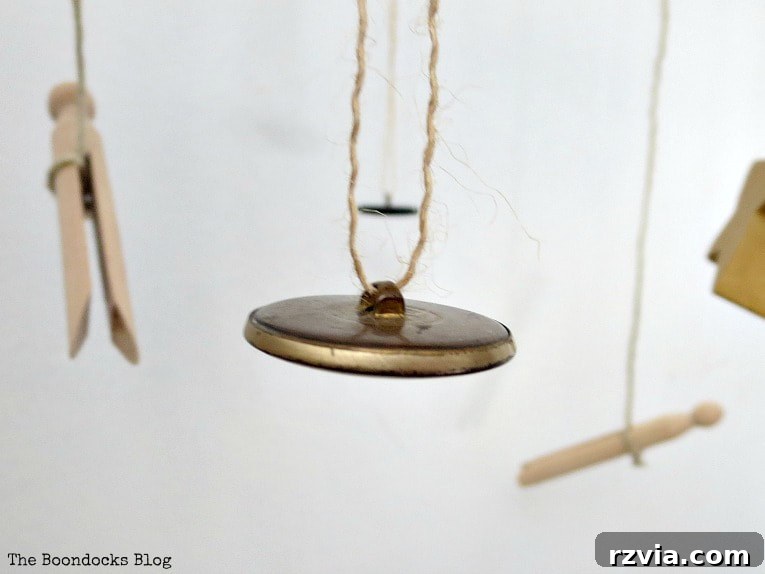
Throughout this entire project, my primary design intention was to work with a harmonious, rustic color palette, focusing on the sophisticated interplay of black, gold, and the natural tones of twine and certain buttons. The black buttons provide a strong, grounding contrast, adding depth and definition to the lighter elements. Meanwhile, the varied gold and natural hues, evident in the twine and in some of the buttons you see below, infuse the mobile with warmth and an unmistakably organic, old-world charm. This carefully chosen combination evokes a timeless, rustic feel, allowing the diverse textures and unique shapes of the upcycled materials to truly shine through and tell their own story within the piece.
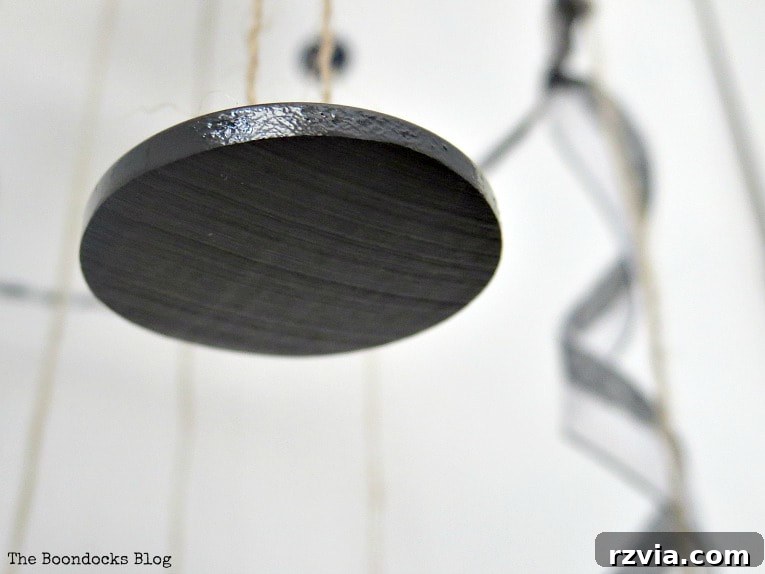
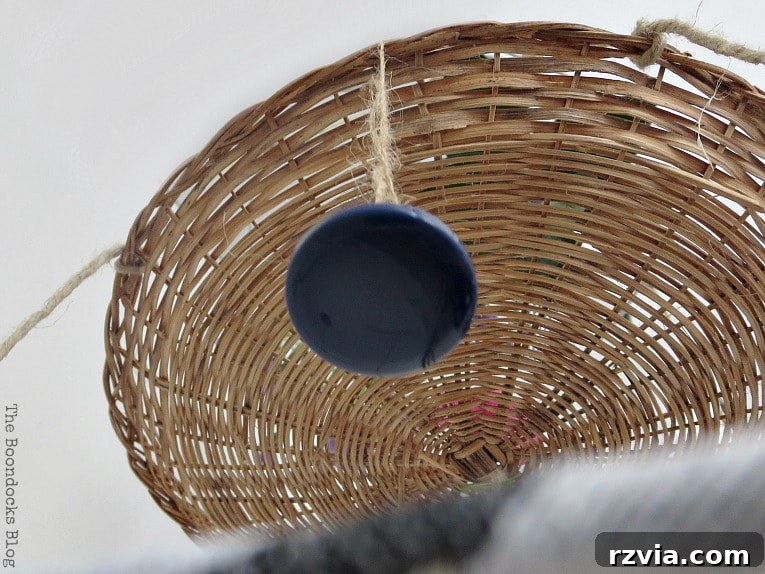
While maintaining a largely rustic and natural palette was key to the mobile’s overall aesthetic, I couldn’t resist adding a subtle hint of unexpected color to create a tiny visual surprise. Having a few beautiful blue buttons on hand – too lovely to leave unused – I decided to incorporate them sparingly into the design, specifically hanging one from the edge of the wicker plate charger. These carefully placed touches of blue add a delightful whisper of contrasting color, providing a gentle visual counterpoint without overwhelming the overall earthy and organic aesthetic. It’s a wonderful example of how even small, judicious additions of color can enhance a project, proving that a little splash of complementary hue can go a long way in making a piece truly unique and engaging, adding another layer of intrigue for the viewer.
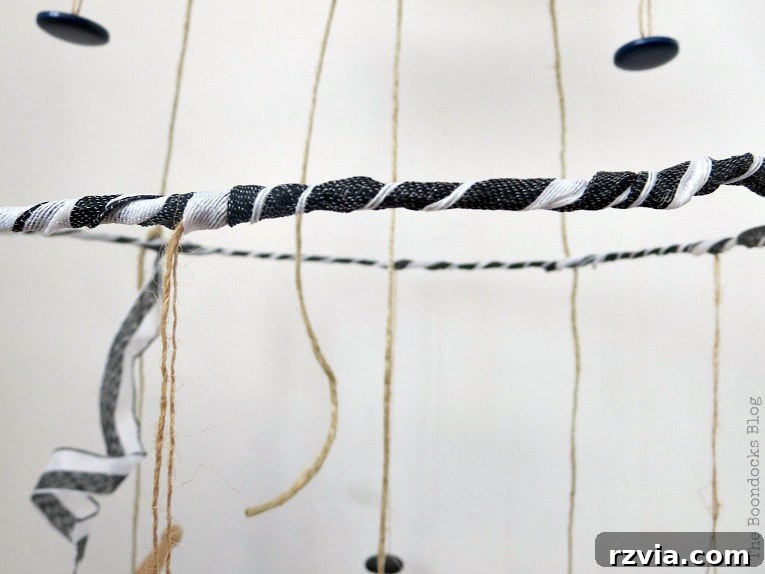
Let’s take a closer look at the ribbon detail on the lower, larger wire circle. Instead of tying it tightly or wrapping it rigidly, I chose a more organic approach, loosely wrapping it around the wire and allowing the ends to hang down gracefully. This creates the appearance of delicate tendrils or streamers, adding a wonderful sense of movement and fluidity to the mobile. This intentional design choice contributes significantly to the mobile’s overall organic and whimsical appeal, softening the structured lines of the wire and enhancing the bohemian, handcrafted aesthetic. It’s these small, thoughtful details – like the flowing ribbon – that truly elevate a DIY project from a simple craft to a captivating piece of art, inviting interaction and contemplation.
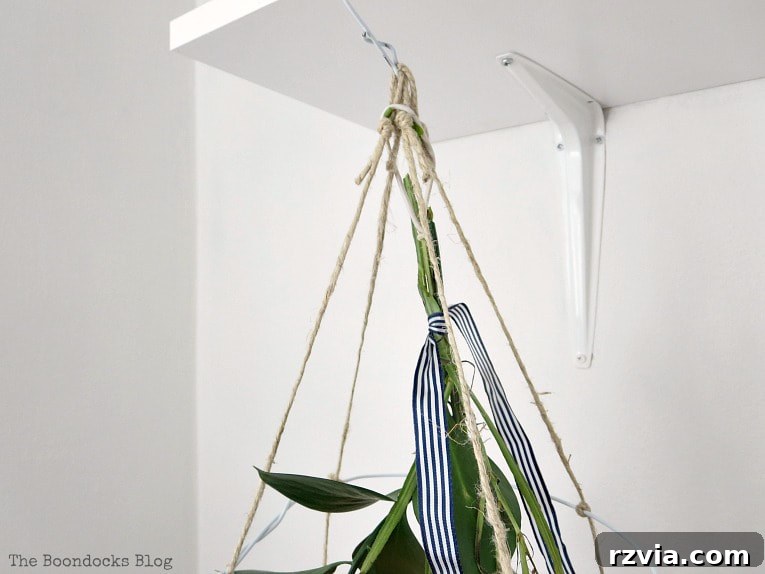
The carefully prepared bouquet, composed of vibrant flowers and lush leaves, was secured elegantly with a matching ribbon. This charming bundle was then precisely and thoughtfully hung from the uppermost point of the mobile, right where the initial twine loops converge and attach to the repurposed wire hook. This strategic placement ensures that the bouquet becomes a striking, organic crown for the entire piece. It serves as a beautiful natural counterpoint to the more structured elements, drawing the eye upwards and completing the harmonious blend of repurposed industrial materials and delicate natural beauty. It’s a testament to how humble elements can create something truly magnificent when thoughtfully combined and placed.
And here it is, the culmination of creativity, resourcefulness, and mindful repurposing – my one-of-a-kind, DIY mobile hanger. Each element, carefully chosen and thoughtfully integrated, comes together to form a unique piece of art that tells a story of transformation, imagination, and a deep appreciation for sustainable living. This mobile isn’t merely a decoration; it’s a conversation starter, a personalized statement, and a testament to the unexpected beauty that can be found when we look at everyday objects with a fresh perspective.
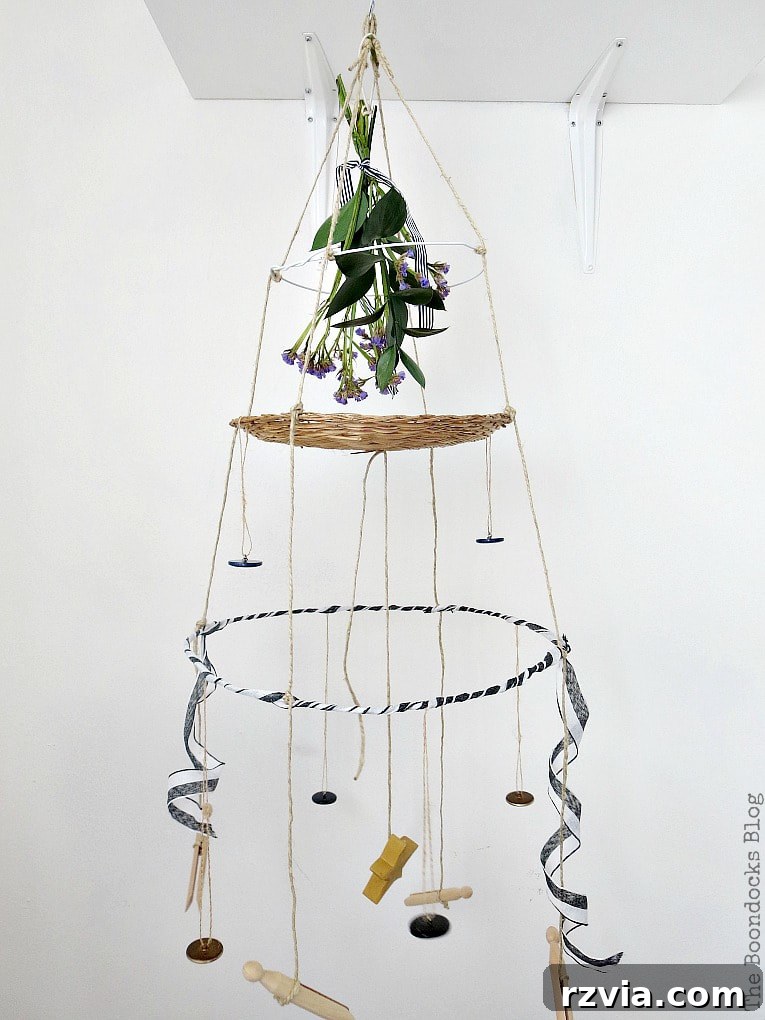
To add a final, subtle touch of intrigue and dimension, I chose to suspend a small wooden star right in the center of the mobile, hanging from the middle tier. This delicate addition, with its natural texture and simple, classic form, serves to “spice things up a bit,” as I like to say. It creates an additional focal point, a tiny celestial anchor amidst the organic flow of the other elements, ensuring that the mobile captivates from every angle and offers layers of visual discovery. This thoughtful inclusion adds another layer of rustic charm and personalized character, making the mobile even more engaging.
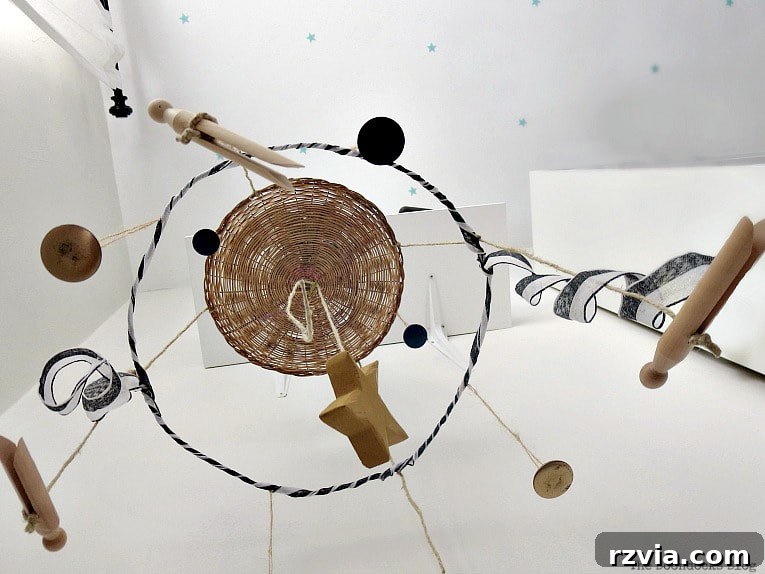
The undeniable beauty of this wire hanger mobile lies in its rich tapestry of diverse, yet harmoniously combined, elements. From the industrial appeal of the repurposed wire frames to the rustic charm and natural texture of the wicker plate charger, the organic softness of the twine, and the whimsical touch of salvaged buttons and flowing ribbons – each component contributes its own unique character and story. Despite their individual origins, I believe they come together beautifully and cohesively to form something truly extraordinary. This mobile is a testament to the power of thoughtful design, creative upcycling, and the art of seeing potential in the overlooked, resulting in a unique piece that invites closer inspection and reveals new details with every glance.
One of the most satisfying aspects of embarking on this creative journey was the personal challenge I set for myself: to design and construct this entire wire hanger mobile art piece without spending a single dime! And I am absolutely thrilled to report that I managed to achieve this ambitious goal. This commitment was made possible in large part thanks to an enjoyable and fruitful journey through my well-stocked sewing box, where countless forgotten buttons and bits of ribbon lay waiting for a new purpose. This commitment to using only existing materials not only made the project incredibly cost-effective but also amplified the sense of accomplishment and resourcefulness, proving that art and beauty don’t always require new purchases; sometimes, they just need a fresh perspective on what we already possess.
I wholeheartedly encourage you, my dear readers, to embark on your own creative adventure. Take a moment to look around your home – peek into your craft bins, rummage through your sewing box, or even explore your garage or attic. You might be truly amazed at the hidden treasures waiting to be discovered and transformed. Go ahead, identify those items you can upcycle and repurpose into your very own unique piece of art or home decor! The possibilities are truly endless, and the profound satisfaction of creating something beautiful and meaningful from what you already have is immensely rewarding and incredibly fulfilling.
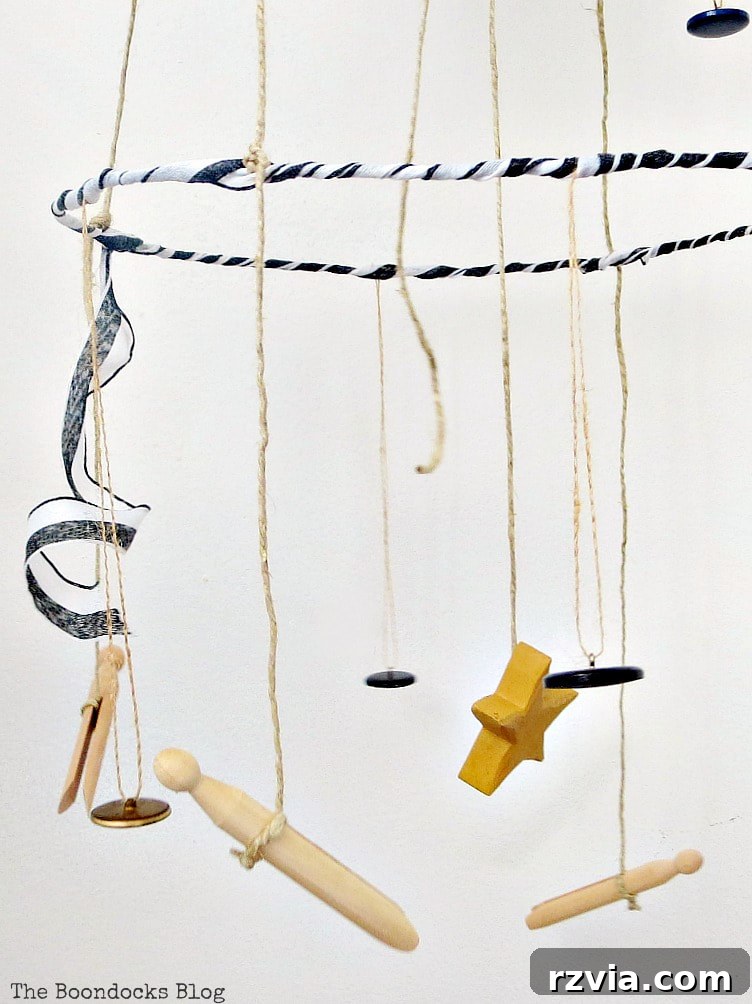
Beyond its static beauty, this mobile truly comes alive when bathed in natural light. When the sunbeams stream through the window and kiss its various elements, that’s when the magic truly happens, transforming it into a dynamic installation. The intricate shadows cast by the repurposed wire, the whimsical buttons, and the delicate twine dance gracefully across the room, creating an ever-changing display of light and dark. This mesmerizing, dynamic interplay adds another captivating layer of artistic dimension, transforming the mobile into a living, breathing part of your home’s ambiance, constantly evolving with the light throughout the day.
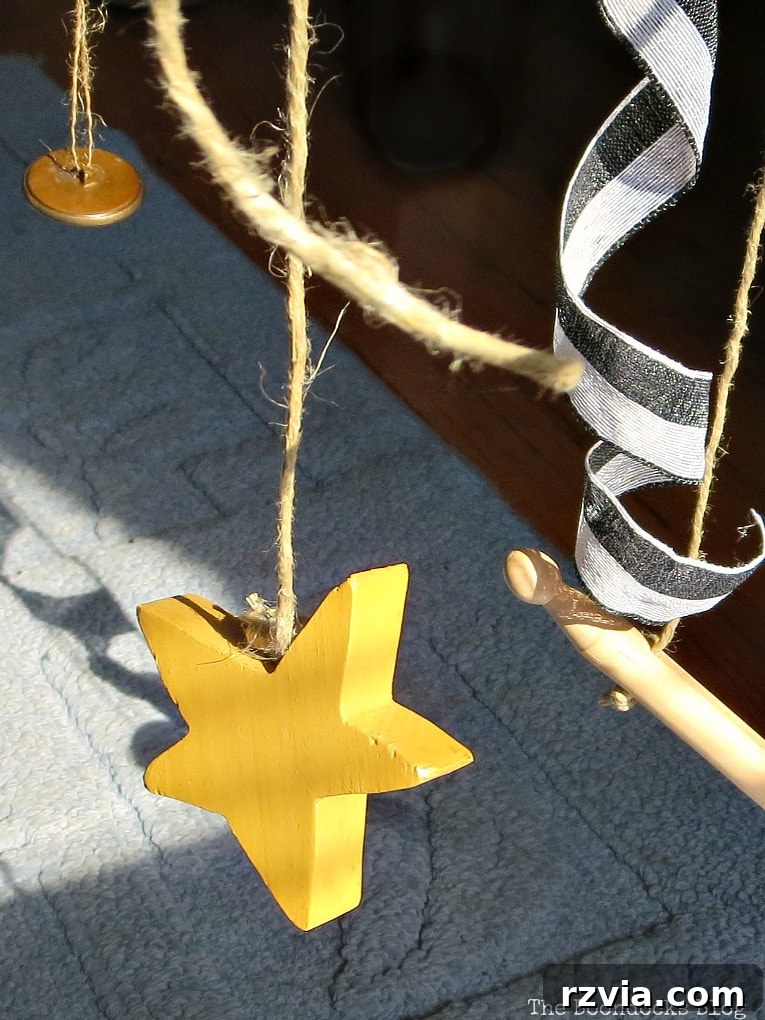
Participating in these International Bloggers Club challenges, exploring projects with such diverse and often unexpected materials, has been an incredibly enriching and enjoyable experience for me. This particular challenge was a significant milestone, as I had never ventured into creating mobile art before. It was not only immense fun but also incredibly liberating, especially since it allowed me to declutter my home by creatively utilizing many items I no longer genuinely needed, turning them into something beautiful and functional. I sincerely hope you found inspiration and enjoyment in witnessing the creation of my unique mobile art piece, crafted entirely from repurposed wire hangers and everyday treasures, demonstrating that creativity knows no bounds when it comes to upcycling.
Now, I turn the question to you, my creative community! Have you ever experimented with making mobile art for your home or as a gift? If so, what fascinating materials did you incorporate into your creation, and what was the most surprising item you managed to repurpose? Share your experiences, tips, and ideas in the comments below – I’d absolutely love to hear about them and be inspired by your ingenuity!

If you truly enjoy the creative insights and DIY adventures shared here, I invite you to subscribe to my blog! By doing so, you’ll receive all my latest projects, inspiring ideas, and valuable crafting tips directly in your mailbox, ensuring you never miss a new post. You can easily find the convenient subscription form located on the sidebar and prominently at the top of the page. For complete transparency regarding how your personal data is handled and protected, please review my comprehensive privacy policy by clicking here. Your privacy is important to me!
Discover More Ingenious Repurposing Projects from Our Archives:
Simple Lanterns with Repurposed Jars: Learn how to transform ordinary glass jars into charming and rustic luminaries, perfect for adding a cozy, ambient glow to any space, indoors or out. This engaging project also utilizes wire in a creative way to enhance its natural and handcrafted appeal, making it a wonderful companion piece to this mobile.
Crafting a Unique Wind Chime from a Tire Rim: Explore another fantastic and ambitious upcycling idea by turning an old tire rim into a melodic and visually striking wind chime. This innovative project demonstrates how unexpected industrial materials can be repurposed into beautiful and functional outdoor decor, creating soothing sounds and a statement piece for your garden or patio.
This blog is created purely for entertainment purposes and to share creative DIY ideas and personal experiences; the tutorials and advice provided should not be considered professional guidance. We strongly encourage all readers to prioritize safety, use appropriate protective gear, and exercise careful execution in all crafting endeavors. For further details regarding the scope and limitations of the content presented, please read our full legal disclaimer by clicking here.