
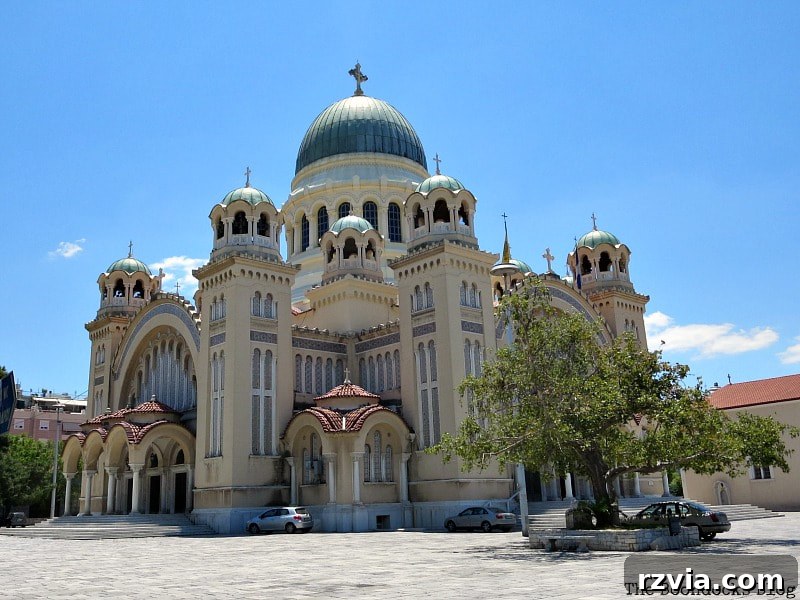
Discovering the Grandeur: A Comprehensive Guide to Saint Andrew’s Cathedral in Patras, Greece
As spring graces Greece, a captivating transformation unfolds. The landscapes burst into vibrant hues, trees unfurl their blossoms, and the air in every town, from bustling metropolises to serene villages, becomes perfumed with the sweet scent of countless flowers adorning streets and balconies. It’s a truly magical time, evoking a profound sense of renewal and celebration.
Beyond its natural beauty, spring also heralds a significant period of spiritual reawakening across Greece, deeply rooted in the Orthodox Christian tradition. This season culminates in the joyous celebration of the Resurrection of Christ, a time deeply cherished by many. Personally, I find the atmosphere surrounding Easter to be the most profound and moving time to attend church. A unique and palpable reverence permeates the evening liturgies held throughout Holy Week, building anticipation for the triumphant Easter Sunday.
With these cherished memories and spiritual reflections stirring within me, I felt compelled to share a glimpse into one of Greece’s most awe-inspiring religious landmarks: the magnificent Saint Andrew’s Cathedral in Patras. This article embarks on a photographic journey, focusing on the breathtaking exterior of this monumental structure. In a forthcoming piece next month, we will delve into the equally splendid interior, which truly deserves its own dedicated exploration.
Patras: Home to a National Treasure
Saint Andrew’s Cathedral, a beacon of Orthodox faith and architectural splendor, is strategically located in Patras, the regional capital of Western Greece. Nestled on the northern coast of the Peloponnese peninsula, Patras holds the distinction of being Greece’s third-largest city. This vibrant urban center is far more than just a gateway; it’s a dynamic hub characterized by its bustling port, which serves as a crucial link connecting Greece to Italy and the wider Western European continent. From here, countless ships embark and disembark, fostering trade, tourism, and cultural exchange, making Patras a truly cosmopolitan city.
Beyond its economic significance, Patras is also renowned for its rich cultural tapestry, most notably as the host of Greece’s largest and most flamboyant annual carnival. This spectacular event transforms the city into a riot of color, music, and festivities, attracting visitors from across the globe. Yet, amidst all its modern vitality and historical layers, Patras is perhaps most profoundly identified as the sacred resting place of Saint Andrew the Apostle, and consequently, the home to this magnificent cathedral dedicated to him. The city’s identity is inextricably linked to this monumental church, a testament to its deep spiritual roots and a source of immense pride for its inhabitants.
The cathedral’s prominent position within Patras not only serves as a focal point for the city’s religious life but also as a powerful symbol of its historical and cultural importance. Its presence reinforces Patras’s standing as a significant pilgrimage site for Orthodox Christians worldwide, drawing faithful and curious travelers alike to witness its grandeur and connect with its profound spiritual heritage. Exploring Patras reveals a captivating blend of ancient history, modern vibrancy, and deep-seated religious devotion, all converging around the majestic silhouette of Saint Andrew’s Cathedral.
A Monumental Scale: Greece’s Largest Orthodox Church
The Cathedral of Saint Andrew is not merely a church; it is an architectural titan, standing as the largest Orthodox church in all of Greece and ranking as the third-largest in the entire Balkan region. Its colossal dimensions are truly staggering, encompassing an approximate area of 2,000 square meters, or an impressive 21,500 square feet. This vast expanse allows it to accommodate an astonishing 7,500 worshipers simultaneously, a testament to its pivotal role as a spiritual gathering place for the faithful. The sheer scale of the building immediately conveys its importance and its capacity to inspire awe.
The grandeur of the cathedral extends beyond its footprint; it is designed to evoke a sense of the divine and to serve as a fitting tribute to its patron saint. Every aspect of its construction, from the robust foundation to the soaring domes, speaks of meticulous planning and profound spiritual intent. Its impressive size is not just for functionality; it symbolizes the strength and enduring legacy of the Orthodox faith in Greece, making it a prominent landmark visible from various points within Patras and even from the sea.
Visitors approaching the cathedral are often struck by its sheer monumental presence, which commands attention and instills a sense of reverence. This architectural marvel not only serves as a house of worship but also as a cultural touchstone, drawing pilgrims, historians, and tourists who seek to witness its magnificence and absorb its spiritual atmosphere. The cathedral stands as a powerful testament to the enduring devotion and architectural prowess of the Greek Orthodox Church, a structure designed to inspire contemplation and faith on an epic scale.
Architectural Splendor: A Basilica of Byzantine Revival
The architectural style of Saint Andrew’s Cathedral is a magnificent example of a Basilica, characterized by its traditional layout that facilitates a large congregational space while evoking a sense of solemnity and grandeur. At its core, the church features a prominent central nave, flanked by spacious aisles on either side. This classical design allows for an unobstructed view of the altar and creates an expansive interior, perfect for large liturgical gatherings.
Dominating the skyline of Patras, the cathedral is crowned by a striking central dome, meticulously designed with a series of windows on its upper level. These windows not only flood the interior with natural light but also serve as a symbolic connection between the earthly and the divine. Complementing this majestic central feature are twelve smaller domes, gracefully adorning each of the cathedral’s imposing towers and strategically placed at the corners of the main building. This intricate arrangement of domes is a hallmark of Byzantine revival architecture, a style that draws heavily from the rich artistic and structural heritage of the Byzantine Empire. The domes, often gilded or brightly colored in traditional Orthodox churches, reflect the light and add an ethereal quality to the structure, symbolizing the heavens and the celestial realm.
The overall design is a harmonious blend of historical reverence and monumental scale, showcasing intricate details in stone and marble that speak to the craftsmanship of its builders. Each arch, column, and carved element contributes to the cathedral’s stately appearance, inviting contemplation and admiration. The basilica layout, coupled with the distinctive Byzantine domes, makes Saint Andrew’s Cathedral a prime example of Greek ecclesiastical architecture, echoing centuries of tradition while standing as a timeless monument of faith in the modern world. Its symmetry and careful proportions ensure that every angle offers a captivating vista, making it a photographer’s delight and a spiritual marvel.
Saint Andrew: The Protokletos and Patron of Patras
The cathedral bears the revered name of Saint Andrew, a figure of immense significance in Christian history, particularly within the Orthodox Church. He is affectionately known as Protokletos, meaning “the first called,” a title that underscores his unique role as the very first of the Apostles to be summoned by Jesus to join him as his disciple. This distinction places him at the very foundation of the Christian movement, making him an incredibly important figure in the narrative of the early church.
Saint Andrew’s lineage is also noteworthy; he was the brother of Saint Peter, another foundational Apostle. Both brothers, originally fishermen from Bethsaida, were called by Jesus to become “fishers of men.” Andrew’s zealous evangelism led him to various regions, spreading the Gospel far and wide. According to tradition, his missionary journeys ultimately brought him to Patras, where he preached Christianity with fervor. It was in Patras that he met his martyrdom, reportedly crucified on an X-shaped cross, which has since become known as Saint Andrew’s Cross.
Because of his martyrdom in Patras, Saint Andrew became the patron saint of the city, deeply embedding his legacy into the very fabric of its identity. His relics, including his skull, were housed in the original church dedicated to him in Patras for centuries, making the city a significant pilgrimage site. Although some relics were moved over time, a portion of his skull and other relics were ceremoniously returned to Patras in the mid-20th century, cementing the city’s status as a spiritual center linked to one of Christ’s most important apostles. The cathedral thus stands not only as a monument to his memory but also as a living testament to his enduring spiritual presence in Patras, continuously drawing pilgrims and visitors seeking to connect with this revered saint.
Disclosure: This post contains affiliate links. If you purchase any of these products through the links, I receive a small commission, which helps me continue to provide you with lovely content. There is no extra charge to you for purchasing through my affiliate links.
A Century in the Making: The Cathedral’s Construction Journey
The monumental task of constructing the new Saint Andrew’s Cathedral began in 1908, under the esteemed guidance of the renowned architect Anastasios Metaxas. Metaxas, a prominent figure in Greek architecture, was celebrated for his contributions to several significant buildings, including the renovation of the Panathenaic Stadium for the first modern Olympic Games in 1896. His vision for the Patras cathedral was grand, aiming to create a structure that would not only serve the spiritual needs of the community but also stand as an architectural masterpiece.
However, the journey to completion was a protracted one, spanning over six decades. Construction finally concluded in 1974, a testament to the sheer scale of the project, the complexities of its design, and the various historical and economic challenges that Greece faced throughout the 20th century. Such a long construction period often reflects periods of war, political upheaval, and economic constraints, all of which can significantly slow down large-scale public and religious works. Despite these delays, the commitment to realizing Metaxas’s magnificent design remained unwavering.
The extended timeline also allowed for careful craftsmanship and the integration of the finest materials, ensuring the cathedral’s durability and aesthetic appeal. The result is a building that not only embodies architectural excellence but also tells a story of perseverance and enduring faith. Its completion marked a significant milestone for the city of Patras and for the Orthodox Church, providing a magnificent house of worship that continues to inspire awe and devotion. The cathedral stands as a symbol of continuity, bridging eras and generations through its enduring presence and spiritual purpose.
The Cathedral’s Cultural Hub
Adjacent to the main cathedral structure, visitors will discover a vibrant cultural center that extends the cathedral’s role beyond purely religious services. This dedicated space serves as a hub for community engagement and intellectual enrichment, featuring a well-stocked bookstore. The bookstore offers a wide array of religious texts, spiritual literature, historical accounts of the church and Patras, as well as souvenirs and educational materials, providing resources for both pilgrims and curious visitors.
Furthermore, the cultural center regularly hosts various exhibitions, enriching the cultural landscape of Patras. These exhibitions might range from displays of ecclesiastical art and historical artifacts to contemporary art installations or educational exhibits on the life of Saint Andrew and the history of the Orthodox Church. Such initiatives underscore the cathedral’s commitment to not only spiritual guidance but also to cultural preservation and education, making it an integral part of the city’s intellectual and artistic life.
This multi-functional center creates an inviting environment for contemplation, learning, and cultural exchange. It provides a space where visitors can delve deeper into the rich heritage associated with Saint Andrew and the Orthodox faith, fostering a greater understanding and appreciation of the cathedral’s broader significance within the community and beyond. It exemplifies how modern religious institutions adapt to serve their communities in diverse and meaningful ways.
Symbolism at the Entrance: The Byzantine Coat of Arms
Above the cathedral’s imposing main door, visitors are greeted by a powerful and iconic symbol: the Byzantine coat of arms. This emblem immediately signals the deep historical and cultural ties of the Greek Orthodox Church to the glorious Byzantine Empire, a civilization that profoundly shaped the spiritual and artistic landscape of the region for over a thousand years. The placement of this symbol at such a prominent position emphasizes the cathedral’s heritage and its connection to a rich imperial past.
This powerful emblem typically features a two-headed eagle, often depicted with a crown or crowns adorning its heads. In this specific context, the two-headed eagle serves as a profound symbol representing the intertwined authority and influence of the Church and State operating under one unified Empire – that of the illustrious Byzantine Empire. The two heads are often interpreted to signify the dual sovereignty of the emperor (temporal and spiritual), or the empire’s dominion over both East and West.
The eagle itself, a creature of majesty and strength, symbolizes imperial power and the unwavering gaze of the Empire over its vast territories. Its two heads looking in opposite directions can also symbolize vigilance and an expansive reach. For the Orthodox Church, this symbol represents its historical connection to the imperial legacy, where the Church often played a pivotal role in the governance and cultural identity of the empire. It’s a reminder of a period when spiritual and temporal powers were deeply integrated, contributing to the distinct character of Orthodox Christianity. Its presence on Saint Andrew’s Cathedral reinforces the cathedral’s status not just as a local church but as a continuation of a grand, ancient tradition deeply rooted in Byzantine heritage.
Beyond the grand symbols, the cathedral also impresses with its exquisite attention to detail. Take, for instance, the intricately carved marble adorning the sides of the doors. Each relief and pattern tells a story of dedicated craftsmanship, reflecting the artistic heritage that imbues Greek ecclesiastical architecture. These delicate carvings, often depicting religious motifs, floral patterns, or geometric designs, add a layer of texture and beauty to the robust stone, inviting observers to pause and appreciate the meticulous artistry involved in the cathedral’s creation. They are a testament to the enduring skill of Greek artisans and the timeless elegance of marble as a building material.
To provide comfort and a moment of tranquility, a beautiful marble fountain graces the cathedral grounds. This elegant feature offers a refreshing sight and sound, particularly welcome during the sweltering Greek summer days. The gentle murmur of water provides a soothing backdrop, inviting visitors to pause, hydrate, and reflect. This practical yet aesthetically pleasing addition enhances the overall experience of visiting the cathedral, creating a serene oasis within the bustling city.
It’s also worth noting the cathedral’s exceptional location: just a block away from the shimmering waters of the Patras Bay. This proximity to the waterfront adds another layer to its appeal. The cool sea breeze often drifts through the area, offering natural relief, and the views of the bay can be truly picturesque, especially during sunrise or sunset. This prime location, combining spiritual significance with natural beauty and urban accessibility, truly makes the setting of Saint Andrew’s Cathedral unparalleled in its charm and grandeur. It doesn’t get much better than this – a spiritual sanctuary set against the backdrop of the Mediterranean Sea.
A Vision of Perfect Symmetry
Continuing our visual tour, we turn our attention to the right side of the Cathedral’s exterior. This perspective reveals the impressive scale and intricate details of the building’s flanks, leading up to its majestic towers and domes. Every architectural element, from the window placements to the decorative cornices, is crafted with precision, contributing to the cathedral’s overall grandeur and balanced aesthetic.
What truly stands out about Saint Andrew’s Cathedral is its remarkable adherence to classical architectural principles, particularly its perfect symmetry. The view of the right side is, in fact, an exact mirror image of the left side. This harmonious balance is a deliberate design choice, creating a sense of order, stability, and aesthetic perfection that is deeply resonant with traditional ecclesiastical architecture. Such symmetrical design enhances the cathedral’s imposing presence and underscores the meticulous planning and execution that went into its construction.
From the southeast side, the symmetrical design of the cathedral is particularly striking, offering a panoramic view that encapsulates its entire architectural brilliance. This perspective clearly illustrates how every wing, tower, and dome aligns in perfect harmony, a testament to the architect’s mastery and the timeless appeal of balanced design. The flawless symmetry contributes significantly to the cathedral’s majestic and awe-inspiring presence, making it a truly magnificent sight from every angle.
Reflecting on these stunning images of Saint Andrew’s Cathedral, I find myself longing to be back in Patras, especially during this beautiful time of year. Spring in Greece, with its gentle warmth and floral abundance before the intense summer heat sets in, truly offers the most delightful conditions for exploring its rich cultural and spiritual heritage. Having now shared the captivating exterior of this monumental church, I hope your curiosity and anticipation are piqued.
Prepare to be truly captivated next month as we venture inside the cathedral. Its interior is a realm of breathtaking artistry, shimmering mosaics, and profound spiritual atmosphere that truly must be seen to be believed. It promises to be an even deeper dive into the beauty and significance of this sacred space. I sincerely hope you’ve enjoyed this photo essay spotlighting the impressive Saint Andrew’s Cathedral in Patras. If these images have sparked your interest in Greek photography, I invite you to explore more of my work in my photo gallery here.
If you appreciate what you see, please consider sharing this post with your friends or saving it on Pinterest. The image above is perfectly designed for Pinterest!
For those who truly love my photography, I encourage you to subscribe to my photo gallery updates below.
SUBSCRIBE TO PHOTOGRAPHY POSTS
More Photography from Greece: Explore the Beauty
<< Adding color with wreaths HOME Mid-Century Modern China Cabinet >>
Linking up to these Link Parties
This blog is for entertainment purposes only; my DIY tutorials are not professional advice. Read my full disclaimer here.
I love it when I get your comments and I will try to reply to every one of them. Please do not add a hyperlink to your comment, otherwise it cannot be published.