
Discovering an Icon: An Unforgettable Walk Across the Brooklyn Bridge Walkway
Just recently, my son and I found ourselves in Lower Manhattan, New York, for a business engagement. With our tasks concluded, a compelling suggestion arose: to walk across the iconic Brooklyn Bridge. It stood right there, an architectural marvel beckoning us with its historic grandeur and promise of unparalleled views. And so, we did. Today, I invite you to join us on this captivating journey – a virtual tour of the astonishing Brooklyn Bridge walkway.
More than just a passage, the Brooklyn Bridge is an experience, a living piece of New York City history stretching almost 6,000 feet (approximately 1.8 kilometers) across the East River, gracefully connecting the vibrant boroughs of Manhattan and Brooklyn. Below its magnificent span, the river flows, a constant witness to the city’s ceaseless energy.
Embarking on the Journey: The Manhattan Entrance
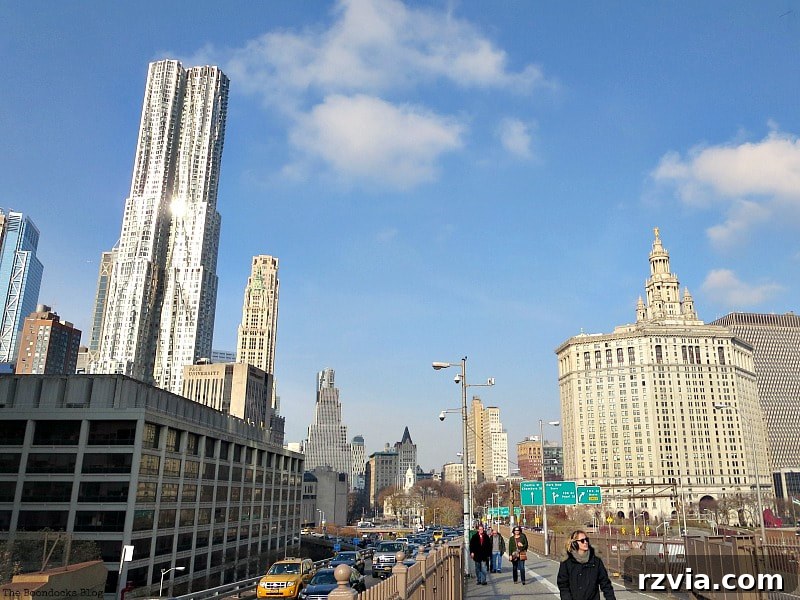
Our adventure began at the entrance on the Manhattan side, a bustling gateway to this engineering marvel. To our right, the modern structures of the Civic Center in Lower Manhattan stood tall, contrasting with the bridge’s historic stone. To our left, the gleaming, unmistakable skyscraper known as “New York by Gehry” captured our attention, a testament to world-renowned architect Frank Gehry’s visionary design. This initial vantage point immediately immersed us in the dynamic fusion of old and new that defines New York City.
A Monument to Innovation: The Bridge’s Storied Past and Engineering Genius
The Brooklyn Bridge is not merely a suspension bridge; it’s a cable-stayed suspension bridge, a groundbreaking design for its era and one of the oldest roadway bridges in the United States. Completed in 1883, its significance was swiftly recognized, earning it the designation of a National Historic Landmark. Its construction was a saga of ambition, innovation, and profound personal sacrifice.
The bridge was the brainchild of John Augustus Roebling, a visionary engineer whose life tragically ended due to an injury sustained during the project’s early stages. He developed tetanus after his toes were amputated, passing away and leaving his colossal dream to his son, Washington Roebling. Washington bravely took up the mantle, facing immense pressure and the perilous conditions of working deep underwater in caissons. He developed decompression sickness, often known as “the bends,” which left him severely debilitated and confined to his apartment, overseeing the project through a telescope.
Yet, the story doesn’t end there. Washington’s indomitable wife, Emily Warren Roebling, stepped into an unprecedented role. She tirelessly assisted her husband, relaying his instructions, learning advanced mathematics and engineering, and becoming the de facto “first woman field engineer” of such a grand endeavor. Her unwavering dedication and intelligence were instrumental in the bridge’s successful completion, a remarkable achievement for a woman in the 19th century and an inspiring testament to human resilience and partnership. Her initial crossing on opening day, often with a rooster as a symbol of triumph, further cemented her place in history.
Panoramic Vistas and Iconic Skylines
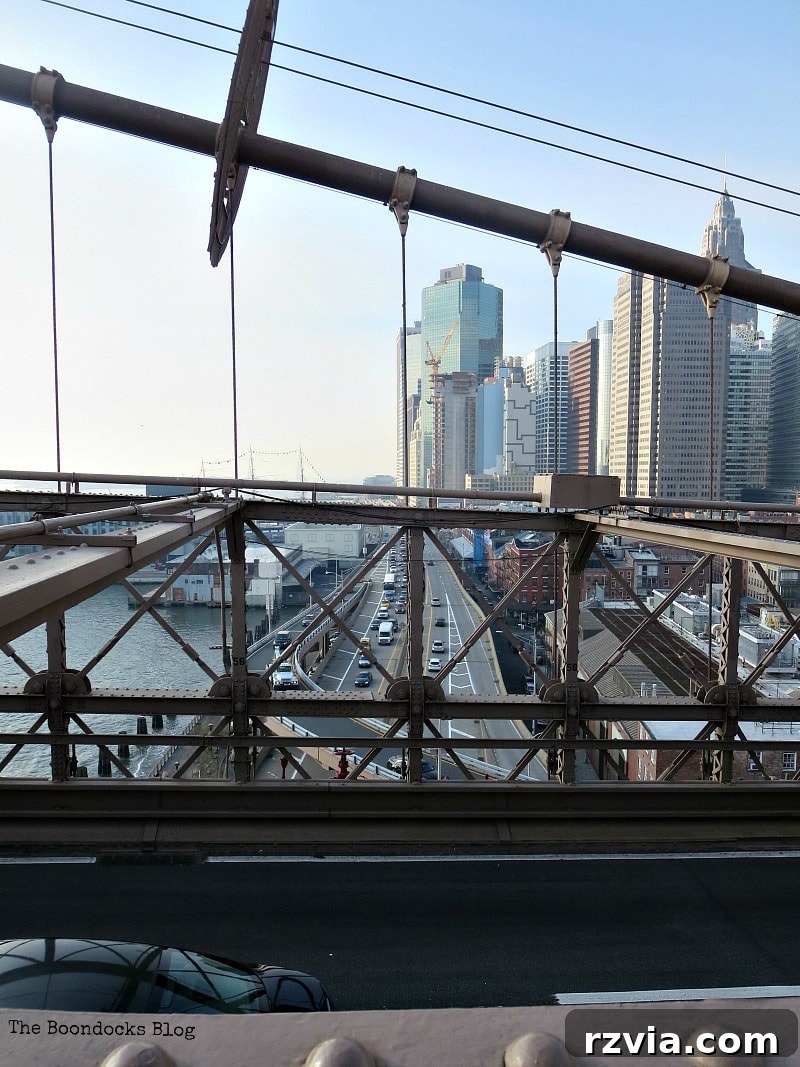
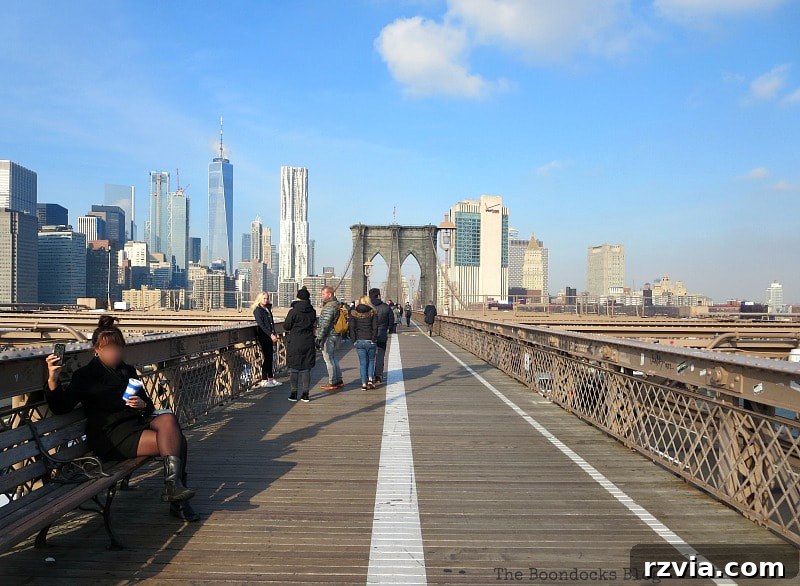
As we progressed along the elevated pedestrian walkway, the views unfolded around us, offering breathtaking panoramas of New York City. Looking south, the towering skyscrapers of the Financial District dominated the horizon. Below, the FDR Drive, named after President Franklin Delano Roosevelt, snaked along Manhattan’s eastern edge, a constant ribbon of movement.
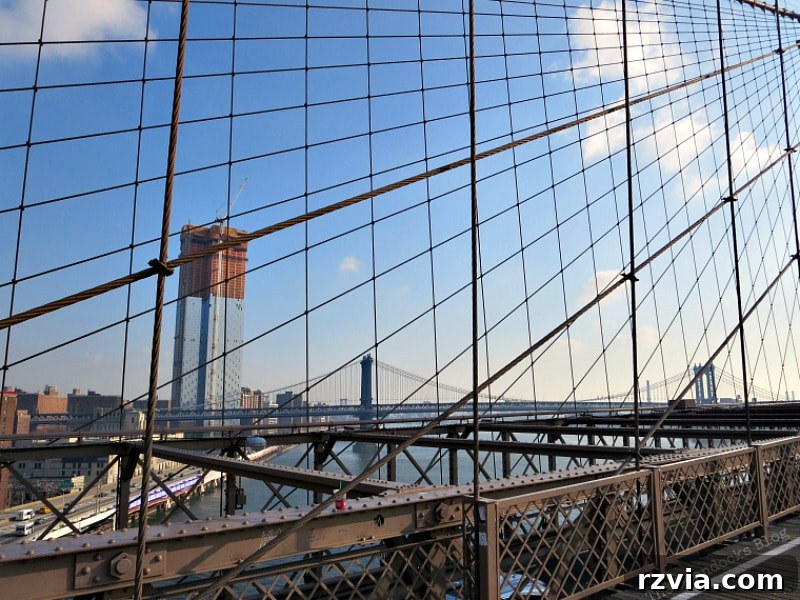
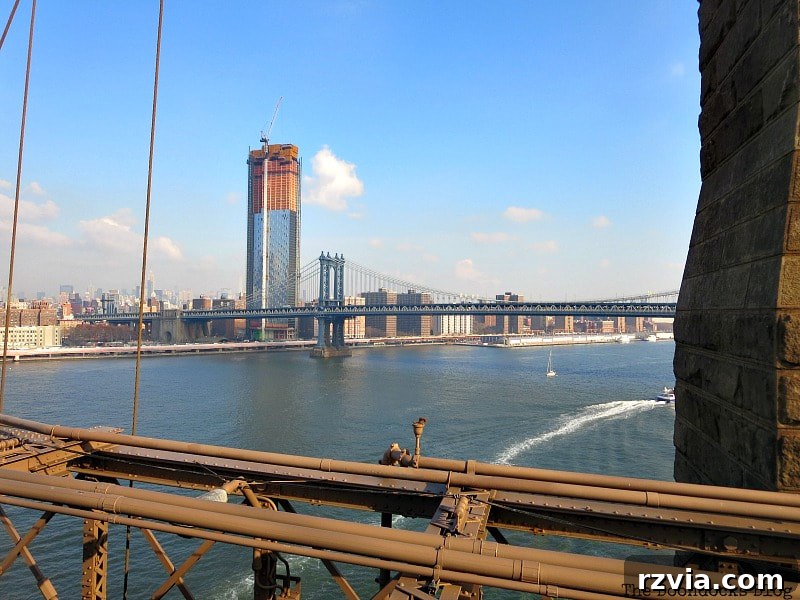
Turning our gaze north towards Manhattan, another magnificent structure appeared: the Manhattan Bridge, which opened in 1909. It stands as one of three grand suspension bridges gracing the lower East River, alongside the historic Williamsburg Bridge and, of course, the Brooklyn Bridge itself. Each bridge possesses its own distinct character, but together, they form an indelible part of the city’s identity.
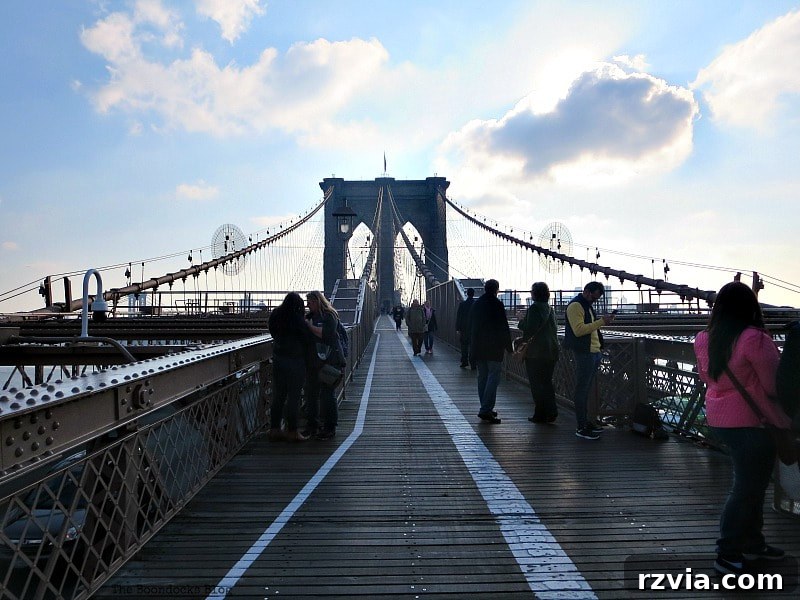
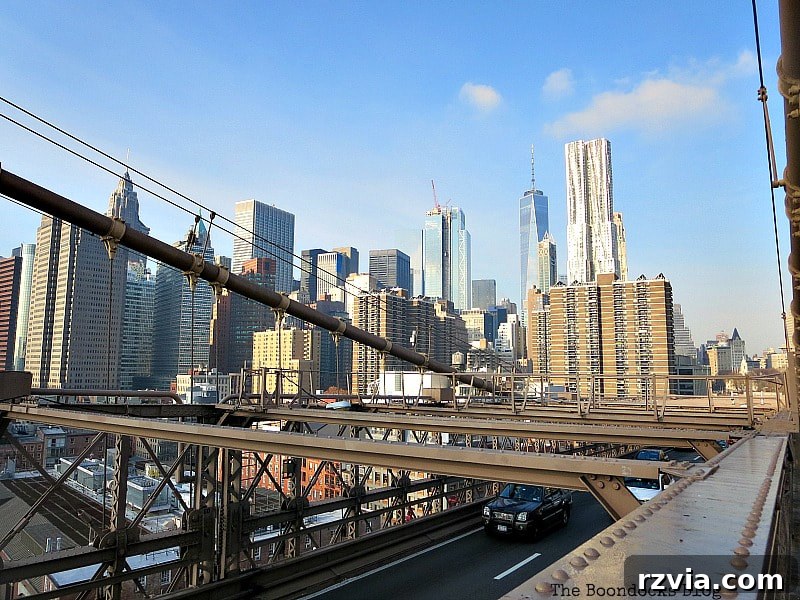
The genius of the Brooklyn Bridge’s design becomes evident as you walk. The roadway for vehicles is smartly positioned below the pedestrian and cyclist walkway, providing an unobstructed experience for those on foot. This elevated perspective offers truly spectacular views of the Financial District, with the formidable One World Trade Center building standing proudly in the background, a symbol of resilience and renewal.
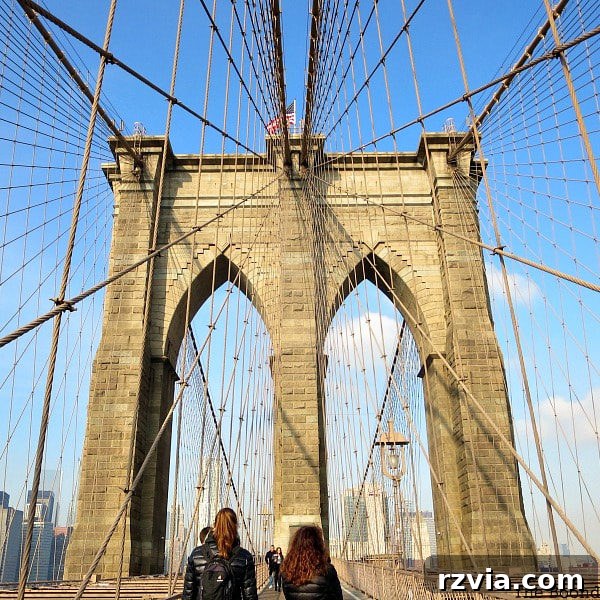
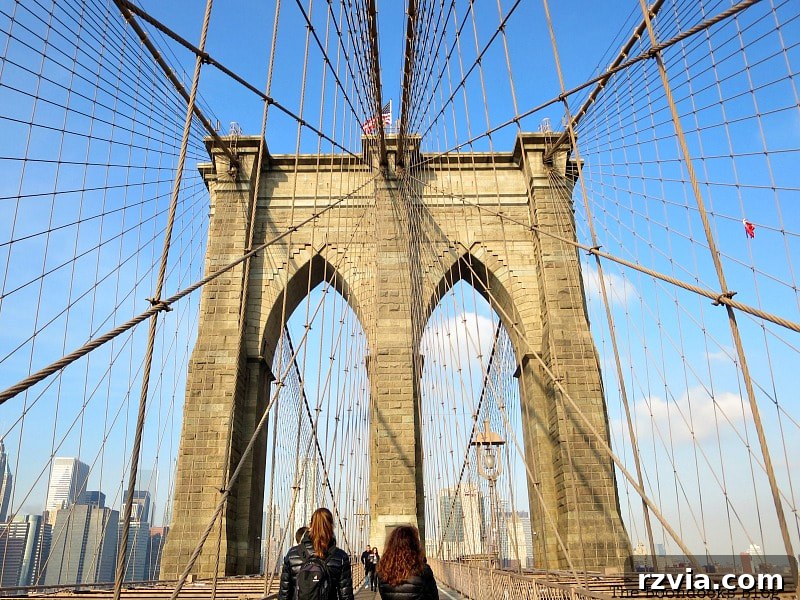
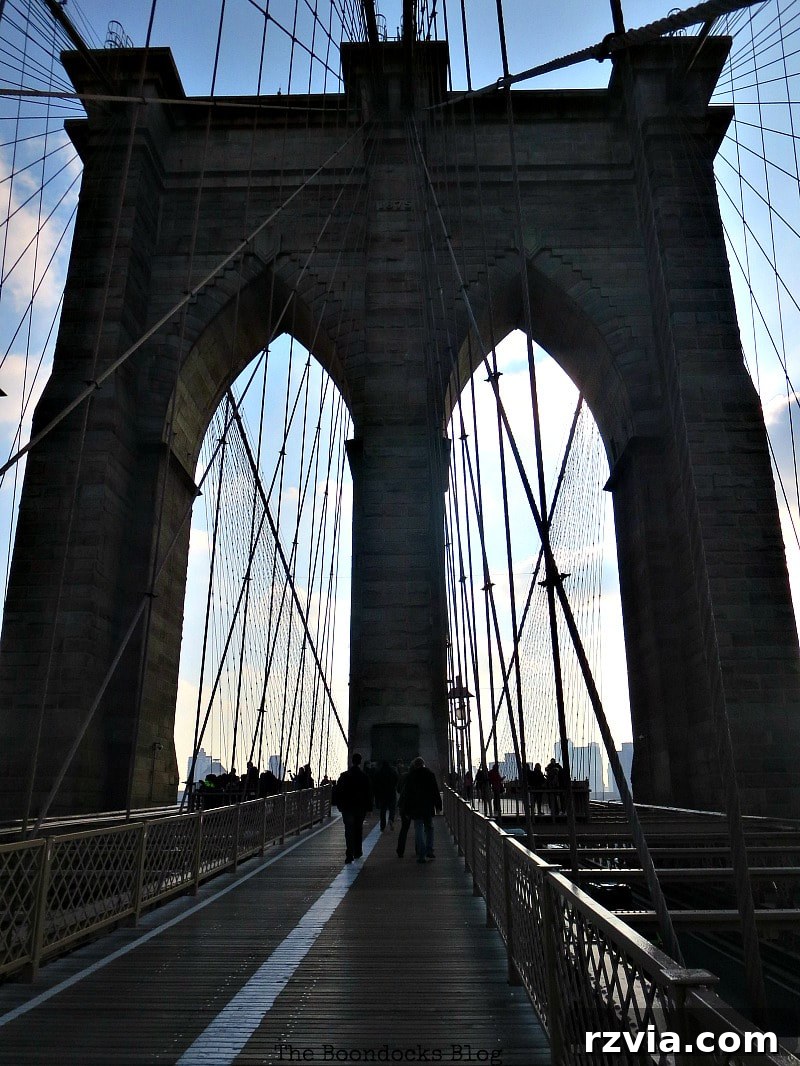
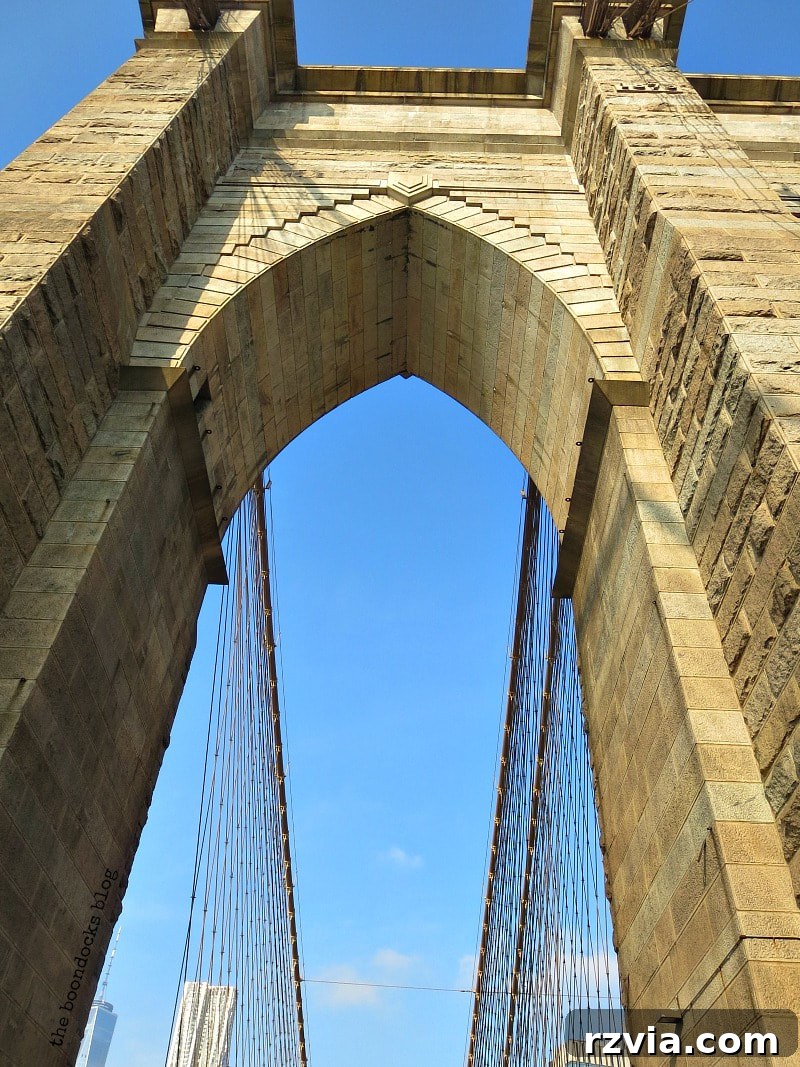
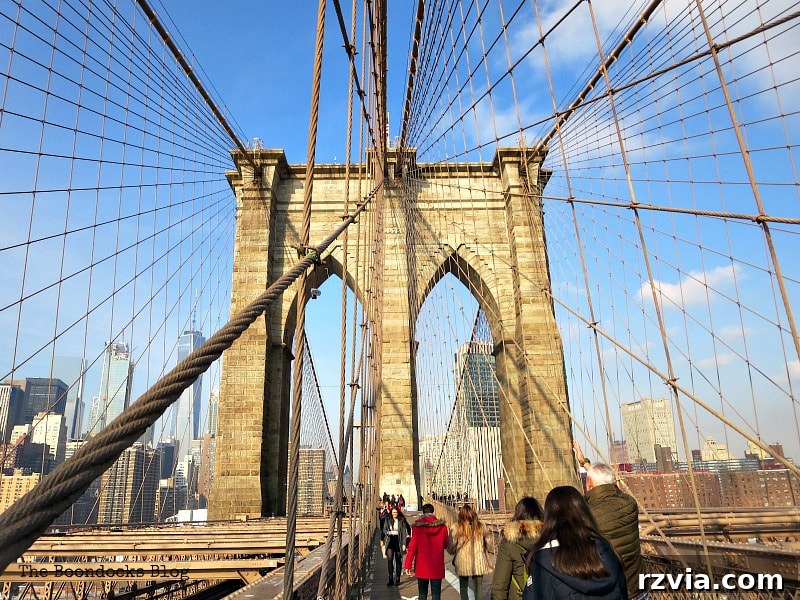
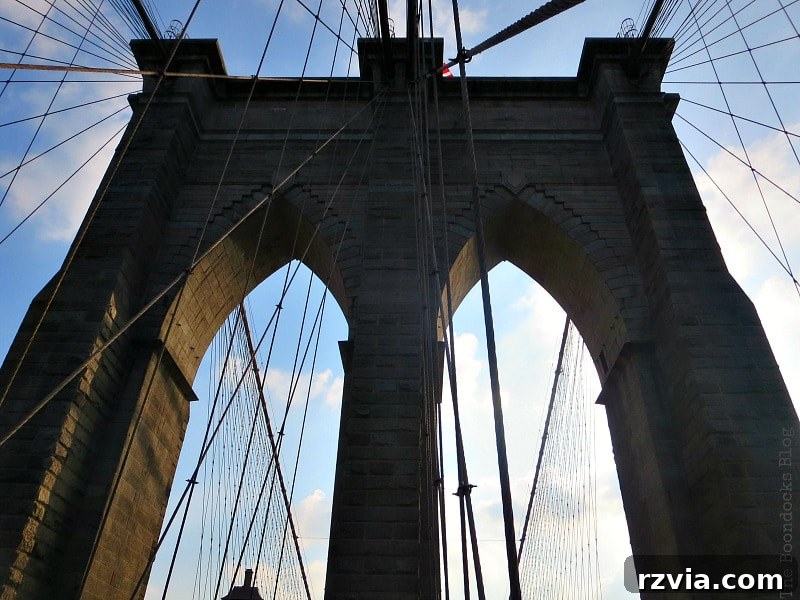
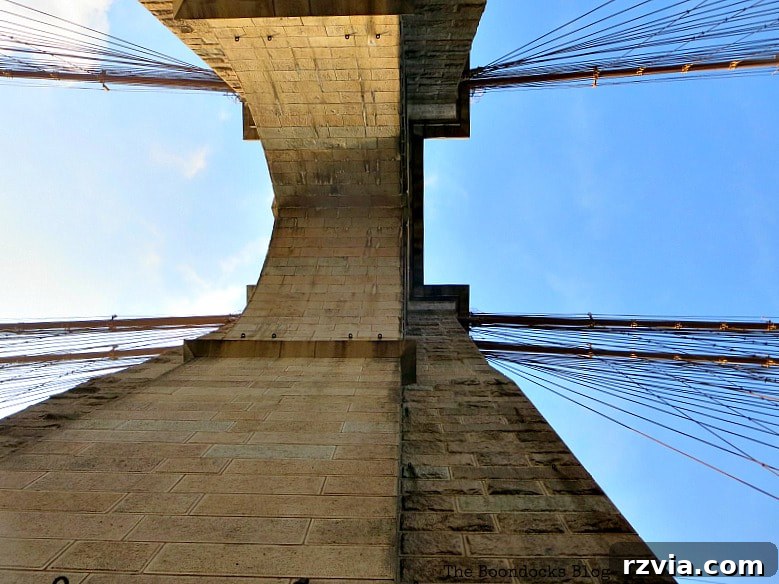
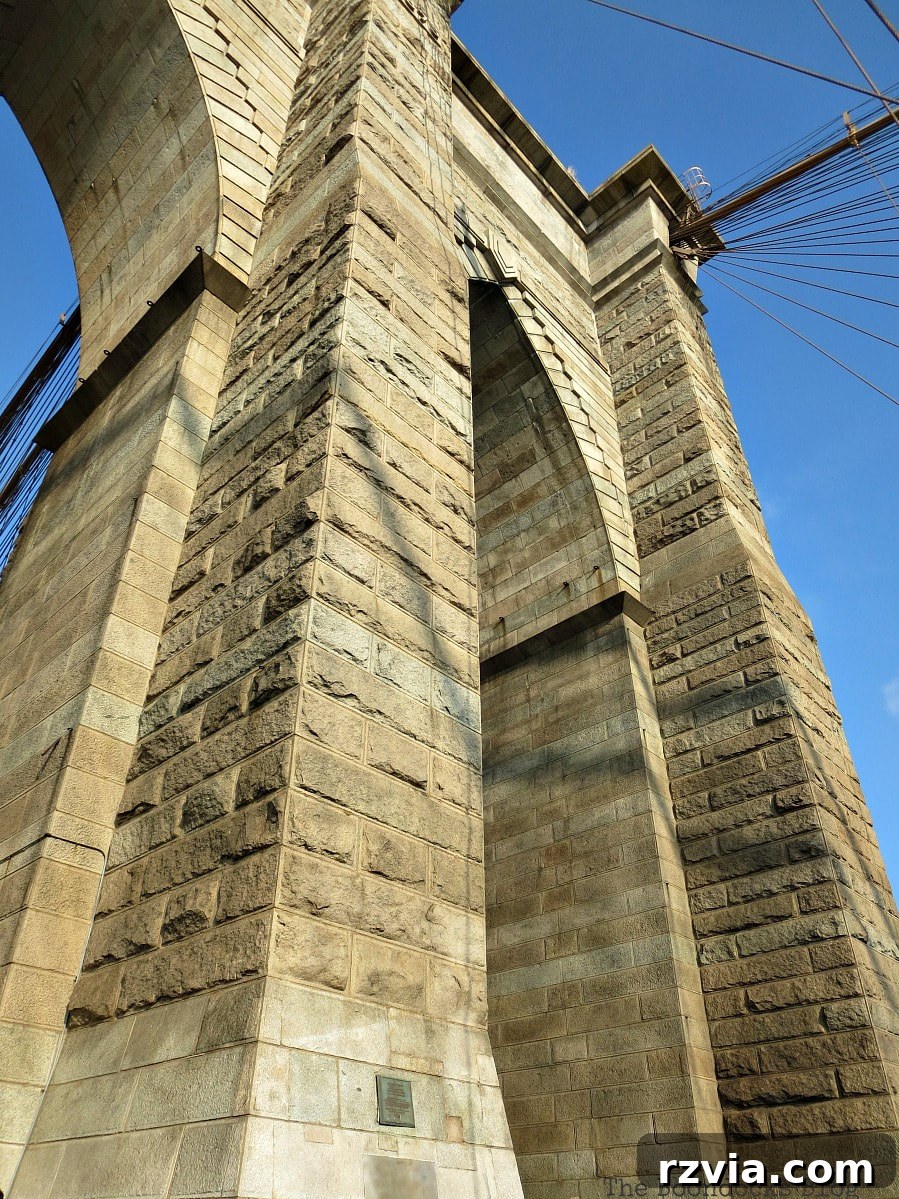
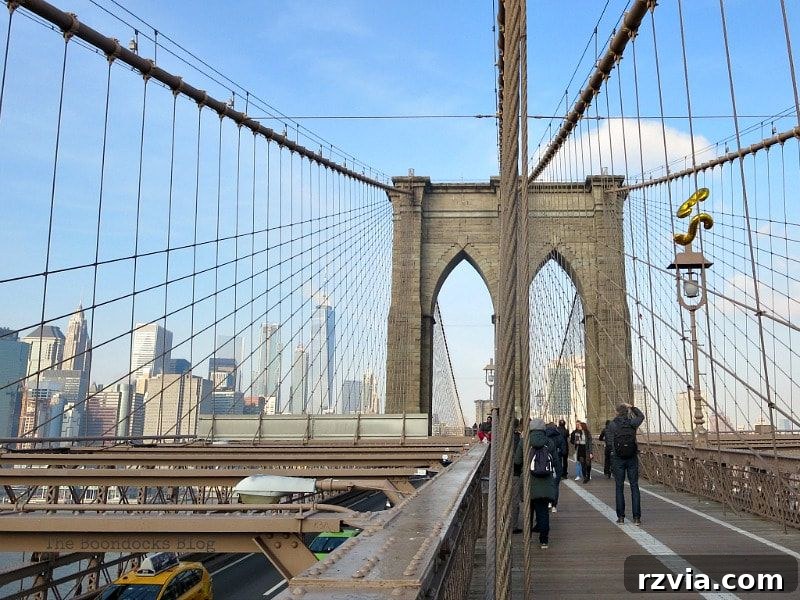
As we approached the first set of Gothic-arch towers, their sheer scale became strikingly apparent. These colossal structures, built from limestone, granite, and Rosendale cement, are not just supports but magnificent architectural statements. The walkway thoughtfully navigates around them, allowing pedestrians to fully appreciate their intricate details and imposing presence.
On the day of our walk, the weather was exceptionally cooperative – partly sunny and mild, creating perfect conditions for photography. The soft light gently caressed the facades of the Financial District buildings, adding a layer of warmth and depth to an already stunning cityscape. Every turn presented a postcard-worthy scene, a photographer’s dream.
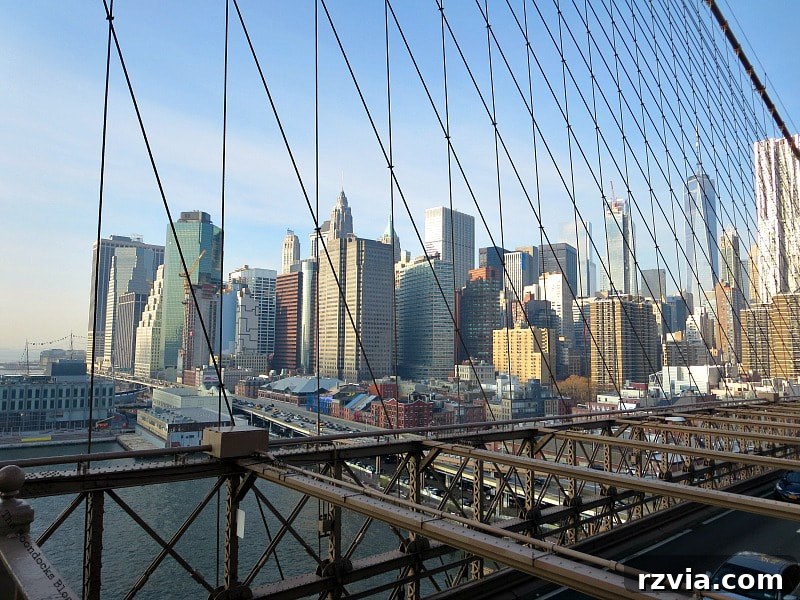
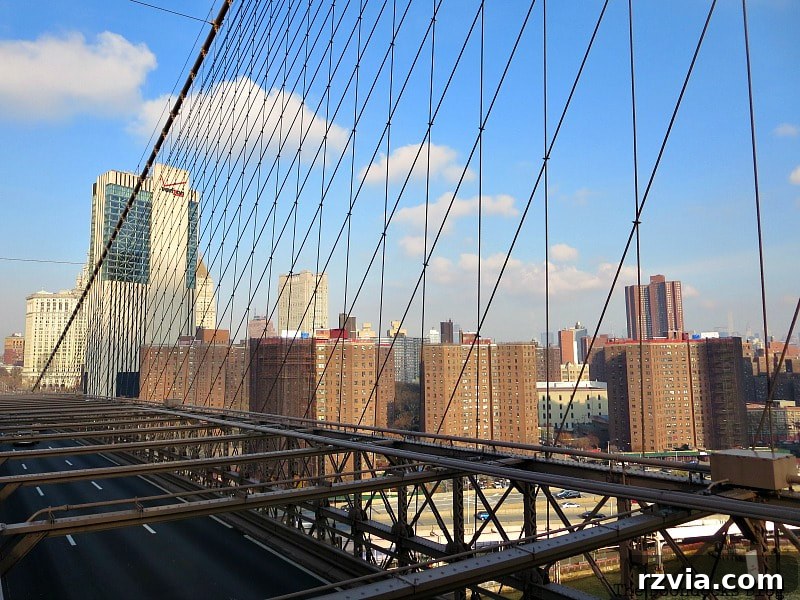
Looking north once more, a cluster of buildings came into view, distinguished by the prominent Verizon tower standing tall on the left. These structures, while modern, still contribute to the rich tapestry of Manhattan’s diverse architecture, visible from our elevated vantage point.
The Bridge’s Evolution: From Horse-Drawn Carriages to Modern Traffic
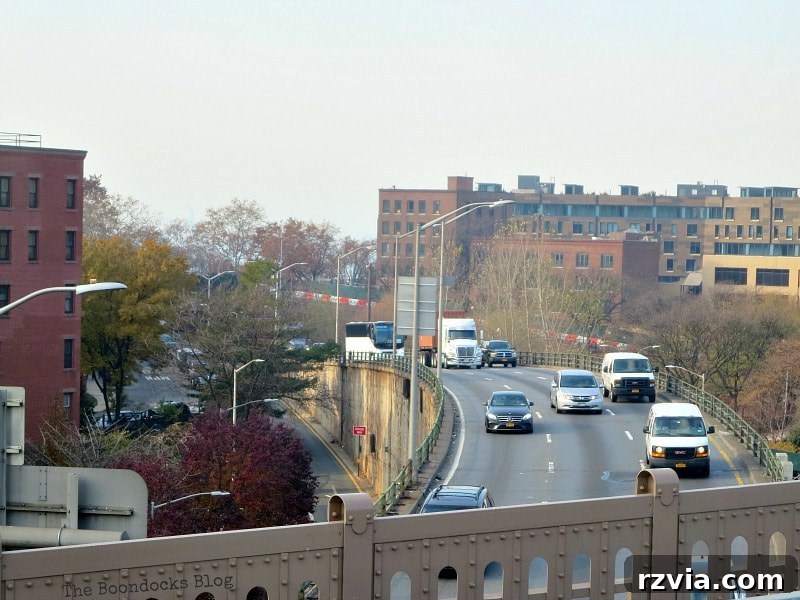
On either side of the pedestrian walkway, the dedicated roads for cars buzzed with traffic. It’s fascinating to consider that when the bridge first opened, it carried horse-drawn vehicles and rail traffic. Today, it accommodates a total of six lanes for cars, a stark reminder of how transportation has evolved over the centuries, yet the bridge itself remains a steadfast conduit.
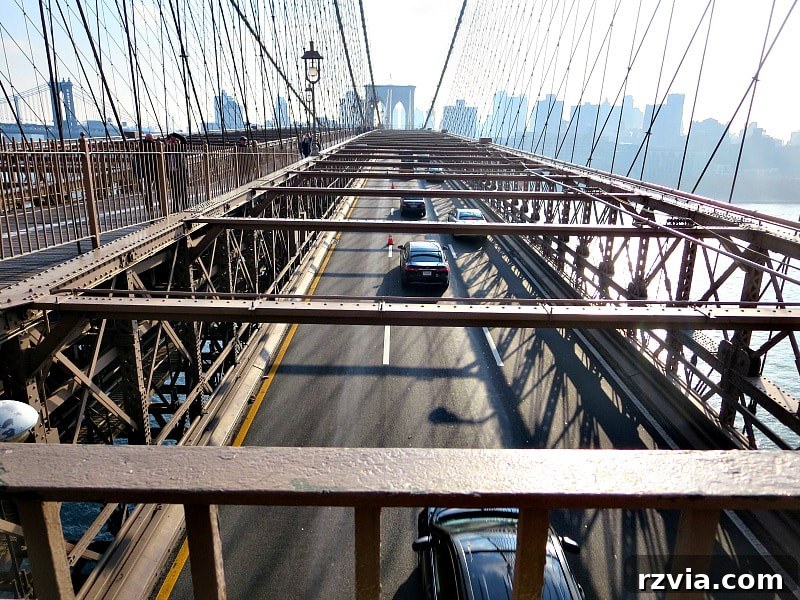
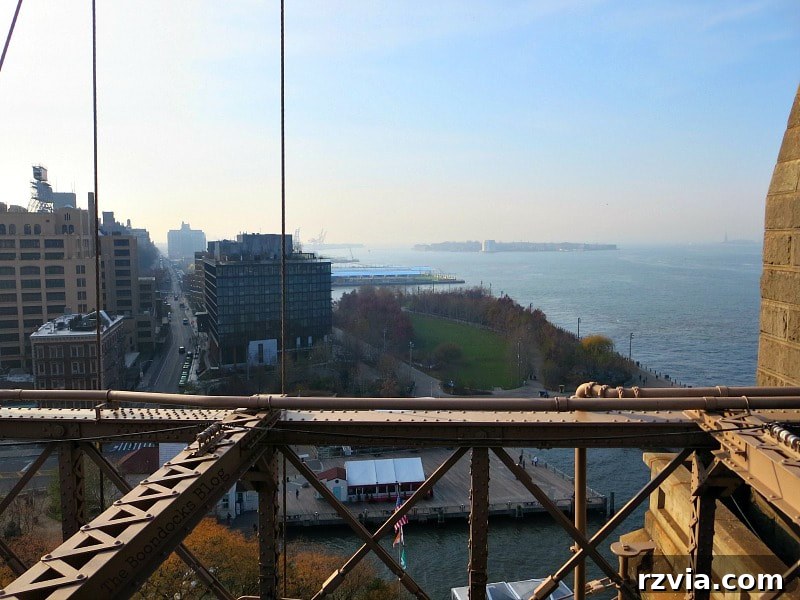
Further south, in the distance, we could discern the lush expanse of Governors Island, a historic island now transformed into a public park. To our left, the distinct skyline of Brooklyn began to emerge, hinting at the vibrant borough awaiting us on the other side.
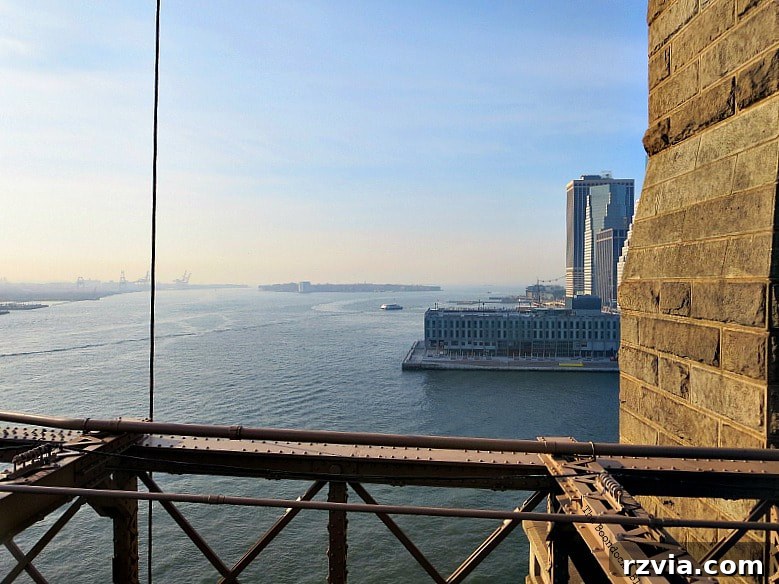
The towers, designed in the majestic Neo-Gothic architectural style, are constructed from robust limestone, granite, and Rosendale cement – materials chosen for their strength and durability. A lesser-known fact is that the vaults beneath these imposing towers were once rented out by the City to generate funds for the bridge’s construction and maintenance. These subterranean spaces have served various purposes, from wine cellars to storage, adding another layer to the bridge’s rich history.
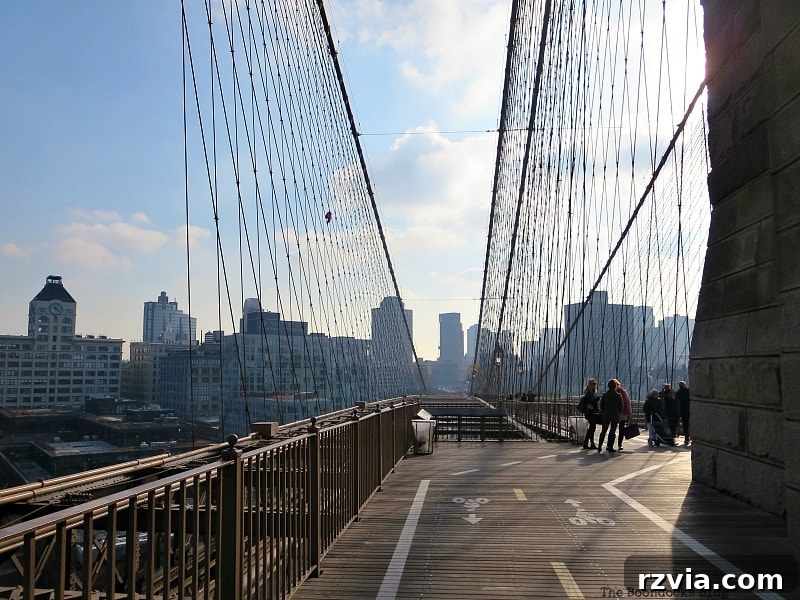
Having just passed the first tower, we paused to look back towards Manhattan. The walkway was a lively tapestry of humanity, filled with a diverse mix of tourists, locals, and cyclists, all sharing the same incredible experience. The energy was palpable, a joyous testament to the bridge’s enduring appeal.
At the Heart of the Marvel: Stability and Spectacle
Reaching the center of the bridge, it’s worth recalling some fascinating historical anecdotes. On its opening day, a staggering 1,800 vehicles and 150,300 people crossed, an immediate demonstration of its immense utility and popularity. As mentioned, Emily Warren Roebling had the honor of being the first to cross.
A few years later, in 1884, the famed showman P.T. Barnum, of the world-renowned Barnum and Bailey Circus, orchestrated a spectacular parade across the bridge. Leading the procession was Jumbo the Elephant, his most celebrated attraction, accompanied by 20 other elephants. This grand spectacle wasn’t just for entertainment; it was a clever and dramatic public relations stunt to emphatically prove the bridge’s structural integrity and stability, dispelling any lingering doubts about its safety among the populace. This event forever cemented the Brooklyn Bridge’s place in popular culture as a symbol of strength and wonder.
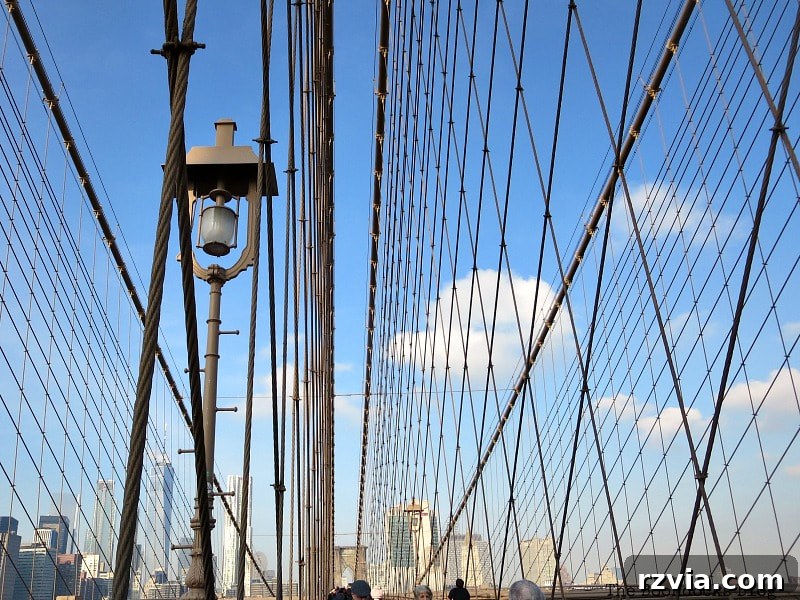
The intricate, web-like construction of the bridge’s steel cables is a marvel in itself. These four main cables, each over 15 inches in diameter and composed of thousands of individual steel wires, are the true sinews of the bridge, holding its massive weight and providing its iconic silhouette. Standing beneath them, you can appreciate the complex engineering that went into creating such a robust and elegant structure.
Reaching Brooklyn: The Second Set of Towers
Finally, we reached the second set of magnificent towers, marking our arrival on the Brooklyn side of the bridge. These towers mirror their Manhattan counterparts in their Neo-Gothic splendor, standing as proud sentinels guarding the entrance to Brooklyn.
From this vantage point, we were afforded another stunning view of the Manhattan Bridge, gracefully arcing across the East River. The river itself, teeming with ferries and boats, flowed beneath us, a vital artery of the city’s commerce and recreation.
Disclosure: This post contains affiliate links. If you purchase any of these products through the links, I receive a small commission, which helps me continue to provide you with lovely content. There is no extra charge to you for purchasing through my affiliate links.
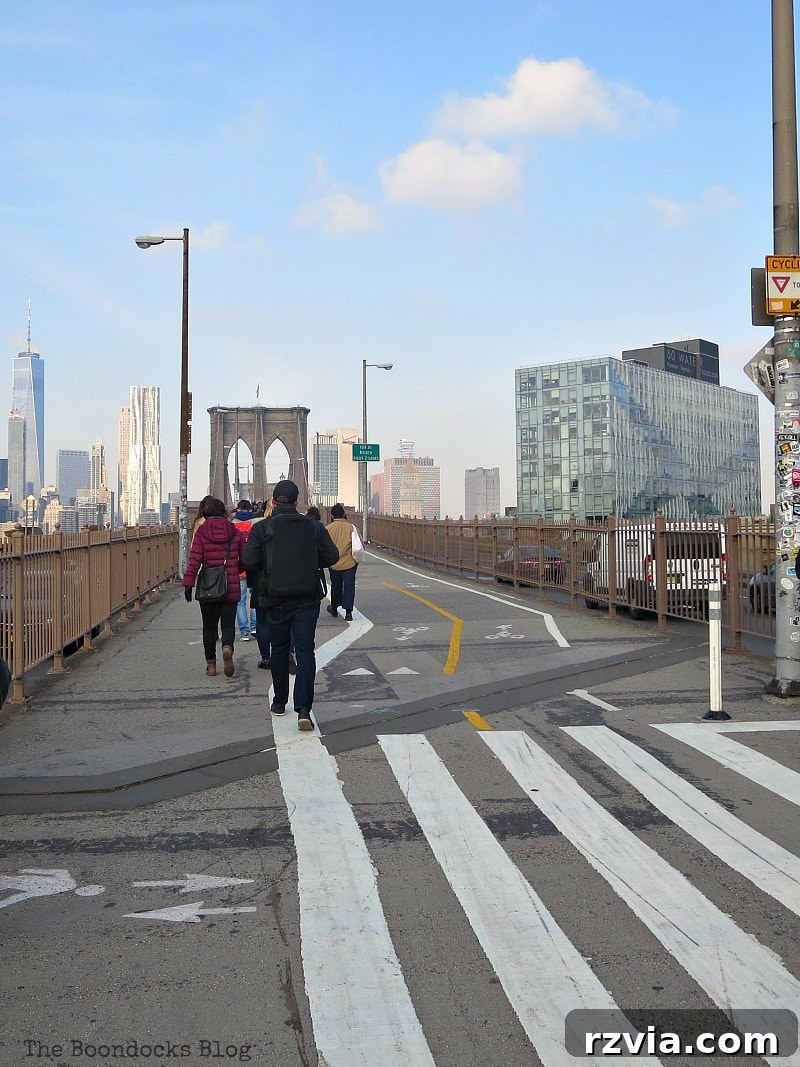
As we continued our descent, we could clearly see how the spacious walkway gracefully winds around the immense towers, providing ample room for pedestrians and cyclists alike. The design masterfully integrates the functional path with the colossal structural elements.
For years after its completion, the Brooklyn Bridge proudly held the title of the tallest structure in the Western Hemisphere, a testament to its groundbreaking engineering. It was justly dubbed “The Eighth Wonder of the World,” a moniker that still resonates with its extraordinary presence.
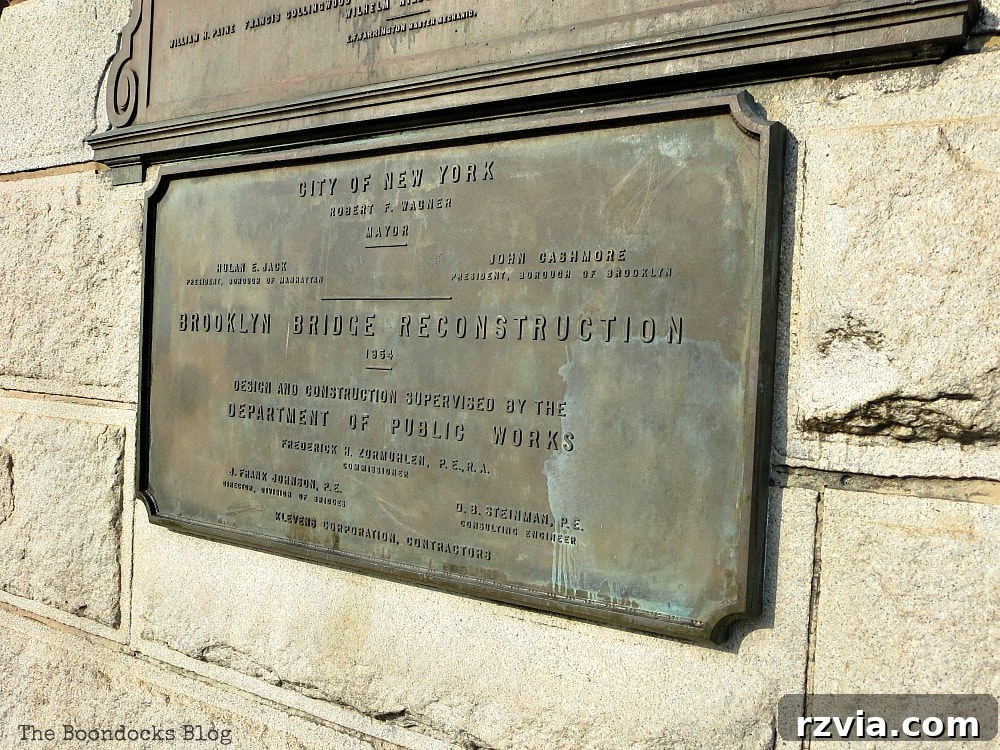
Continuing our southward gaze, we admired Brooklyn Bridge Park sprawling below, a vibrant green space hugging the waterfront, with Governors Island still visible in the background, anchoring the expansive harbor view.
Even as we walked past the second set of towers, the allure remained strong. Countless tourists and professional photographers alike were still snapping away, trying to capture the magnificent angles and the sheer power of these historical structures. It’s clear these towers possess an undeniable magnetic charm that transcends time.
Discovering Brooklyn: Heights and DUMBO
On the Brooklyn side, the landscape shifted to reveal the charming roads and distinctive brownstone buildings of the Brooklyn Heights area. This upscale neighborhood, known for its historic architecture and tree-lined streets, offered a picturesque welcome. The walkway itself gracefully extends well into Brooklyn, providing a gentle transition into the borough.
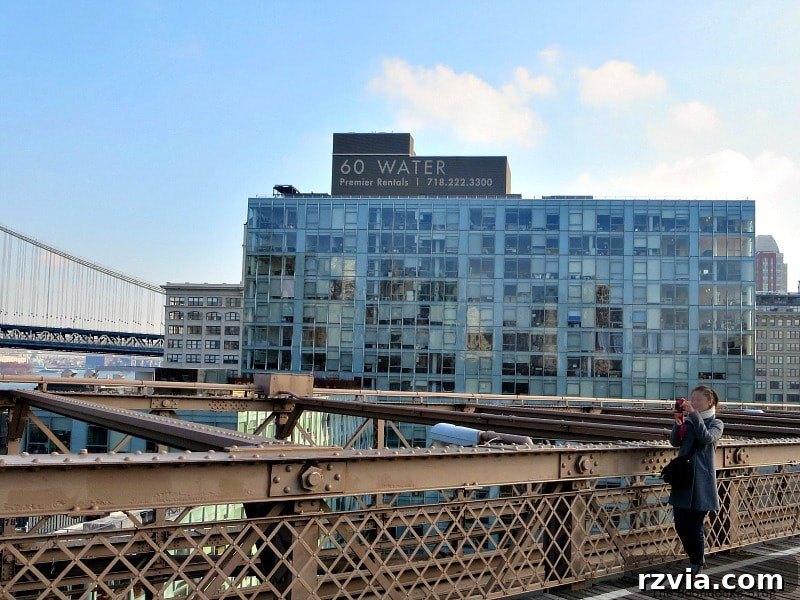
To our right, an intriguing contemporary building, 60 Water Street, caught our eye. It stands proudly in DUMBO (Down Under the Manhattan Bridge Overpass), Brooklyn’s historic waterfront neighborhood. DUMBO has undergone a remarkable transformation in recent decades, evolving into a highly trendy and sought-after area, particularly since its revitalization by Two Trees Management. It’s now a vibrant hub for tech startups and creative industries, notably housing the headquarters of e-commerce giant Etsy. The juxtaposition of historic industrial buildings with modern offices and residential spaces creates a unique and dynamic urban fabric.
Conclusion: A Walk Worth a Million Bucks
And finally, after an exhilarating walk that took us about half an hour, we reached the official entrance to the bridge’s walkway on the Brooklyn side. This journey was more than just exercise; it was an immersion into history, engineering, and breathtaking beauty, offering views that truly felt “worth a million bucks!”
I sincerely hope you enjoyed this virtual tour of the astonishing Brooklyn Bridge. If you ever find yourself in New York City, a walk across this magnificent landmark is an absolute must-do experience. It offers a unique perspective on the city’s grandeur and a profound connection to its enduring legacy.
For those eager to delve deeper into the bridge’s complex construction and fascinating history, you can find more information here. And to explore more of my photography adventures, feel free to visit the photo gallery here.

More Photography Adventures in New York
A One Way Ticket to Adventure
Tour of the High Line Park